
This episode is sponsored by BEAM Minerals.
- BEAM Minerals – Get 20% off your first order at https://beamminerals.com/FLIPPING50 with code FLIPPING50.
One of the best moves for your heart health after 50 doesn’t involve cardio at all?
Meet the wall sit for menopause—a surprisingly powerful exercise that research suggests can help lower blood pressure while building lower-body strength.
Discover the science, the technique, and the surprisingly achievable protocol that could change how you approach exercise in menopause.
Find out why the wall sit for menopause deserves a spot in your heart-health and strength-training routine!
Questions We Answer in This Episode:
- [00:04:49] Can isometric exercise improve blood pressure more than traditional cardio?
- [00:10:35] Can wall sits build lower-body strength when squats and lunges bother your knees?
- [00:14:07] How long should you hold a wall sit, and how often should you do it?
- [00:17:56] Can isometric exercises build muscle—and how long can the benefits last?
- [00:20:55] Are wall sits enough to replace traditional strength training?
- [00:24:59] How do you perform a wall sit safely without putting unnecessary stress on your knees?
- [00:29:05] How should beginners progress with wall sits?
Wall Sit for Menopause Reveals a Surprising Way to Support Heart Health
The Research: Isometric Exercise Beat Cardio for Blood Pressure
- A 2023 meta-analysis published in the British Journal of Sports Medicine examined 270 randomized controlled trials involving nearly 16,000 participants.
- Isometric training, which involves holding a muscle contraction without significant joint movement, produced the greatest overall improvements in blood pressure among the exercise categories compared.
- Isometric exercise reduced:
- Systolic blood pressure by approximately 8 points.
- Diastolic blood pressure by approximately 4 points.
- Wall sits ranked first for improving systolic blood pressure, while running ranked first for diastolic blood pressure.
- By comparison, aerobic exercise reduced systolic blood pressure by approximately 4.5 points and diastolic blood pressure by approximately 2.5 points.
Wall Sits Are Knee-Friendly Strength Exercise
- Knee discomfort can make traditional squats and lunges difficult, even when proper form and technique are used.
- Wall sits provide a static alternative, allowing you to strengthen your lower body without repeatedly moving through the knee joint.
- Consistent isometric training can improve strength within and around the joint angle being trained.
- Improved muscle strength may make everyday activities easier, including:
- Getting in and out of chairs.
- Sitting down and standing up from the toilet.
- Getting in and out of bed.
- Getting in and out of a car.
The Wall Sit Protocol: How Much Do You Actually Need?
- The protocol is a total of 8 minutes per session.
- 4 sets of 2-minute wall sits, with 1-2 minutes recovery between sets
- 3 times a week, with recovery days between sessions.
- Rather than attempting two minutes immediately, build your tolerance and endurance progressively.
- Adjust the depth of the wall sits to stay within a comfortable range.
- Consistency and progressive effort matter more than forcing yourself into a challenging position before you’re ready.
Can Wall Sit for Menopause Improve Blood Pressure and Build Strength?
Isometric Exercise Can Build Muscle, Too
- A follow-up study examined the effects of isometric exercise on muscle size and strength.
- Isometric training can increase muscle size and strength, even at lower intensities.
- Holding muscles at longer lengths, which generally means working at a deeper joint angle, produced greater muscle growth.
- After 4 weeks of training 3 times per week, participants maintained their strength and blood pressure benefits during a subsequent month when exercise frequency dropped to once weekly.
Why You May Not Need to Exercise as Frequently to Maintain Results
- Once you’ve established a certain level of fitness, maintaining it may require less frequent training than building it initially.
- This is relevant during menopause, when work, travel, family responsibilities, disrupted sleep, and changing energy levels can make consistent exercise more challenging.
- A temporary reduction in training frequency doesn’t mean you’ve lost all your progress.
Wall Sits VS Traditional Strength Training
- Isometric exercises can improve strength.
- Traditional resistance training involving movements such as squats, lunges, and deadlifts can produce greater overall strength gains.
- Wall sits should not automatically replace traditional strength training when you’re capable of performing it safely.
- For women limited by knee pain or movement restrictions, wall sits can provide a starting point for rebuilding strength.
- Isometric training is a valuable tool, not a replacement for every form of resistance training.
Wall Sit for Menopause Offers Knee-Friendly Strength and Heart Health Benefits
How to Perform a Wall Sit Safely and Effectively
- Proper positioning can make a significant difference in how comfortable and effective your wall sits feels.
- Set yourself up for stability:
- Stand with your back against a wall.
- Slide down slowly rather than dropping into position.
- Start with a partial squat instead of immediately aiming for a 90-degree angle.
- Have a sturdy counter, table, or chair nearby if you need additional support.
- Pay attention to posture:
- Keep the back of your head against the wall.
- Bring your shoulder blades back and open your chest.
- Maintain a neutral spine with its natural, slight lower-back curve.
- Avoid forcing your entire lower back flat against the wall.
- Position your feet correctly:
- Move your feet far enough away from the wall to keep your heels underneath your knees.
- Aim for approximately a 90-degree relationship between your lower legs and the floor.
- Keep your weight toward your heels rather than the balls of your feet.
- Your toes should be able to wiggle inside your shoes.
- Push your hips gently back into the wall to engage your quadriceps and glutes.
- Make adjustments when needed:
- If you feel strain around your kneecaps or inside the knee joint, move your feet slightly farther away.
- Adjust your depth until you find a comfortable position.
- Use nearby support if you feel unsteady.
Wall Sit for Menopause May Help Lower Blood Pressure Without Cardio
How to Progress From 30 Seconds to Two-Minute Wall Sits
- Begin with four 30-second holds if you’re new to wall sits.
- If that feels comfortable and your body responds well, progress to four 45-second holds.
- Gradually work toward 4 1-minute holds and eventually 4 2-minute holds.
- Pay attention to how your body feels during the exercise and the following day.
- Progress should reflect your current strength, comfort, and recovery.
Stay Open to New Science About Exercise and Aging
- What you learned decades ago may not tell the whole story today.
- This is especially important for women navigating menopause, post menopause, and their 60s, whose exercise needs and circumstances may change over time.
- Don’t let outdated exercise beliefs limit what may be possible for your strength, cardiovascular health, and longevity.
Wall Sit for Menopause Delivers Surprising Benefits in Just Eight Minutes
Connect with Flipping 50:
- Website – Flipping 50
- Facebook Group – Flipping50 Insiders
- Instagram – @Flipping50TV
- YouTube – @Flipping50TV
- More Episodes – Flipping 50 The Stronger Way
References:
- British Journal of Sports Medicine. 2023, PMID:37491419.
- Sports Medicine. 2024, PMID:38762832.
- European Journal of Applied Physiology. 2017, PMID:27853886.
- Scandinavian Journal of Medicine & Science in Sports. 2019, PMID:30580468.
- BMJ Open Sport & Exercise Medicine. 2026, PMID:42825238.
- European Journal of Applied Physiology. 2023, PMID:37458822.
Other Episodes You Might Like:
- Previous Episode – Your Mindset About Aging Holds You Back From Better Health
- Next Episode – Menopause The Musical® Celebrates 25 Years of Embracing Womanhood and Shattering the Stigma
- More Like This – Is 15 Weeks Enough to Build Muscle PostMenopausal? Science Unpacked
Resources:
- Work with Debra with an Ultimate Assessment
- FLIP Menopause program – Join the next live cohort
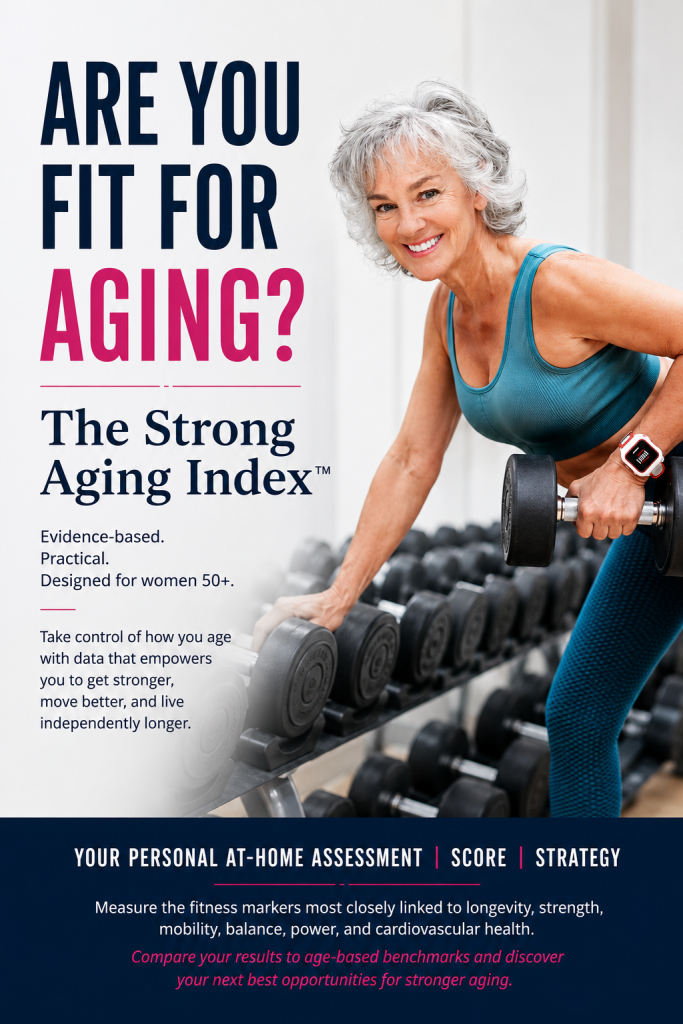
- Measure what matters using the Flipping 50 Strong Aging Index
- Hot Off The Press! The science for staying strong.
- Understand how sleep relates to your hormones with Flipping 50 Sleep Yourself Strong
If this episode made you flip your workout routine — share it!
👉 Post to your stories, tag @Flipping50TV in Instagram and share the episode to your best friend.
👉 Meet other women, who are done with outdated fitness advice, at Flipping50 Facebook Group.
👉 Subscribe, share, and leave a review if you’re ready to flip the script on Flipping 50 The Stronger Way.