
This episode is sponsored by BEAM Minerals.
- BEAM Minerals – Get 20% off your first order at https://beamminerals.com/FLIPPING50 with code FLIPPING50.
Is 15 weeks enough to build muscle postmenopausal?
If you’re wondering whether your muscles can still grow stronger in postmenopause, the science is here.
You’ll learn how to approach strength training, find the right balance between workouts and recovery, and measure progress beyond the number on the scale.
Discover what the research actually tells us about whether 15 weeks is enough to build muscle postmenopausal — and how to put those findings to work in your own strength-training routine.
Questions We Answer in This Episode:
- [00:01:48] The study: 15 weeks being enough to build muscle postmenopausal.
- [00:12:10] Why isn’t the scale telling the whole story?
- [00:16:52] Do you really need to lift three days a week?
- [00:18:23] Can you get stronger without changing everything?
- [00:20:54] How do you build strength safely after 50?
- [00:26:04] How do you know your strength training is working?
What 15 Weeks of Strength Training Can Do After Menopause
- Building muscle after menopause is possible.
- Fifteen weeks is just under four months — a realistic timeframe to work toward measurable improvements in strength and muscle.
- Menopause symptoms don’t mean you have to put your strength goals on hold.
What Research Reveals: Is 15 Weeks Enough to Build Muscle PostMenopausal?
Who and How?
- 65 postmenopausal women experiencing hot flashes and low physical activity levels
- Either supervised resistance training three times per week for 15 weeks or a control group that maintained its usual low activity.
- Researchers used MRI scans to measure muscle volume and strength tests to assess lifting performance.
- Only 44 participants completed MRI scans at both the beginning and end of the study.
Results
- Muscle volume increased by about 4%, and strength improved in the training group.
- The control group did not show the same muscle-volume gains.
- Fat infiltration within the muscle did not change during the 15 weeks.
- These findings highlight an important distinction: muscle size, strength, and the amount of fat within muscle are different measures. Improvement in one doesn’t automatically mean every other measure will change, too.
What the Research Doesn’t Tell Us
- The 4% increase in muscle volume was an average, not a guarantee for every woman.
- Because participants had low activity levels, the results may not apply in the same way to women who have been strength training consistently for years.
- The study tested three weekly workouts but did not compare that schedule with two sessions per week.
- It didn’t establish whether hormone therapy changes muscle gains or whether 15 weeks of training leads to fewer fractures or a longer life.
The findings are encouraging, but they shouldn’t be stretched beyond what the researchers actually measured.
What Women Should Know: Is 15 Weeks Enough to Build Muscle PostMenopausal?
Stop Letting the Scale Define Your Progress
- Your weight doesn’t tell the whole story.
- You may feel stronger, sleep better, have more energy, or notice your clothes fit differently without seeing a change on the scale.
- Before deciding a program isn’t working, ask yourself: What am I trying to improve, and am I measuring the right thing?
How Often Should You Lift Weights?
- Start with two total-body strength sessions per week.
- More workouts aren’t necessarily better if you’re not recovering between sessions. Fatigue can leave you lifting less weight or completing fewer repetitions.
- After six to twelve weeks, reassess your energy, sleep, workout performance, and recovery before considering a third session.
- The goal is to find the training schedule that works for your body and your life — not simply copy the study’s schedule.
Make Your Strength Program Work for You
- Choose exercises, weights, and repetitions that match your current ability, and have a plan for when to increase resistance.
- Your program should challenge your muscles without unnecessarily aggravating your joints.
- Keep a simple training log. Record your weights, repetitions, how the workout feels, and how you feel the following day.
- Repeat the same exercises with consistent technique so you can compare your progress over time.
How to Track Progress and Know When to Increase Weights
- Measure what matters in everyday life.
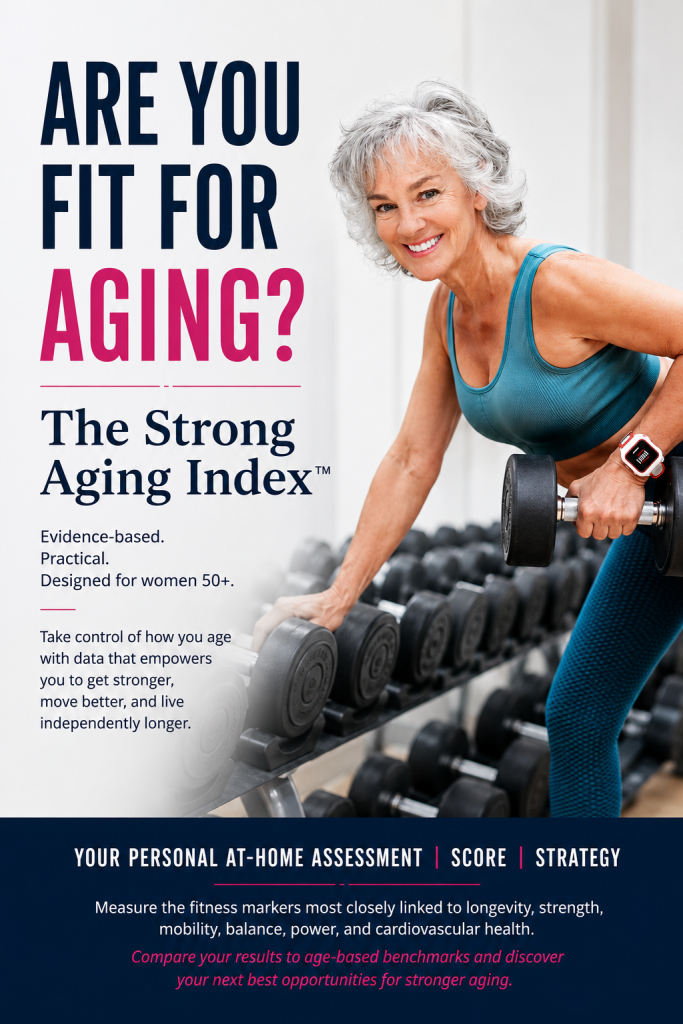
- Assess your balance, mobility, and power alongside strength. Try the Flipping 50 Strong Aging Index to measure what matters with an easy at-home self-assessment test you can do in minutes.
- Start with foundational exercises and gradually expand your program as your strength, energy, and recovery allow.
How 15 Weeks Enough to Build Muscle PostMenopausal May Change Training
Final Takeaway: Start Where You Are
- 15 weeks of resistance training can produce meaningful improvements in muscle volume and strength after menopause.
- You don’t need to copy someone else’s routine. Choose a plan that fits your goals, ability, and recovery.
- Track progress beyond the scale, and give your body time to respond.
- Use the Flipping 50 Strong Aging Index as a starting point for assessing your fitness and identifying areas to work on.
Discover Whether 15 Weeks Enough to Build Muscle PostMenopausal
Connect with Flipping 50:
- Facebook Group – Flipping50 Insiders
- Instagram – @Flipping50TV
- YouTube – @Flipping50TV
- More Episodes – Flipping 50 The Stronger Way
References:
- Maturitas. 2026, PMID: 41687563.
Other Episodes You Might Like:
- Previous Episode – Perimenopause’s Long Game: How It Shapes Your Health for Years to Come
- More Like This:
Resources:
- Work with Debra with an Ultimate Assessment
- Flipping 50 App on iOS App Store & Google Play
- Questions / Contact Debra on Instagram or Facebook Group
- FLIP Menopause program – Join the next live cohort
- Flipping 50 Master class – Choose your session here
If this episode made you flip your workout routine — share it!
👉 Post to your stories, tag @Flipping50TV in Instagram and share the episode to your best friend.
👉 Meet other women, who are done with outdated fitness advice, at Flipping50 Facebook Group.
👉 Subscribe, share, and leave a review if you’re ready to flip the script on Flipping 50 The Stronger Way.