Nervous system recovery in midlife may be the missing piece when your usual workouts, recovery routines, and sheer determination no longer deliver the results you expect.
Are you pushing through fatigue or chasing better recovery scores?
For women in midlife and beyond, HRV, stress, and the stories you tell yourself can influence the way you respond to everyday demands.
Discover why building capacity—not simply pushing harder—may help you approach exercise, recovery, and midlife with greater awareness.
If you’re ready to rethink stress and discover a more mindful approach to nervous system recovery in midlife, this conversation is for you.
My Guest:
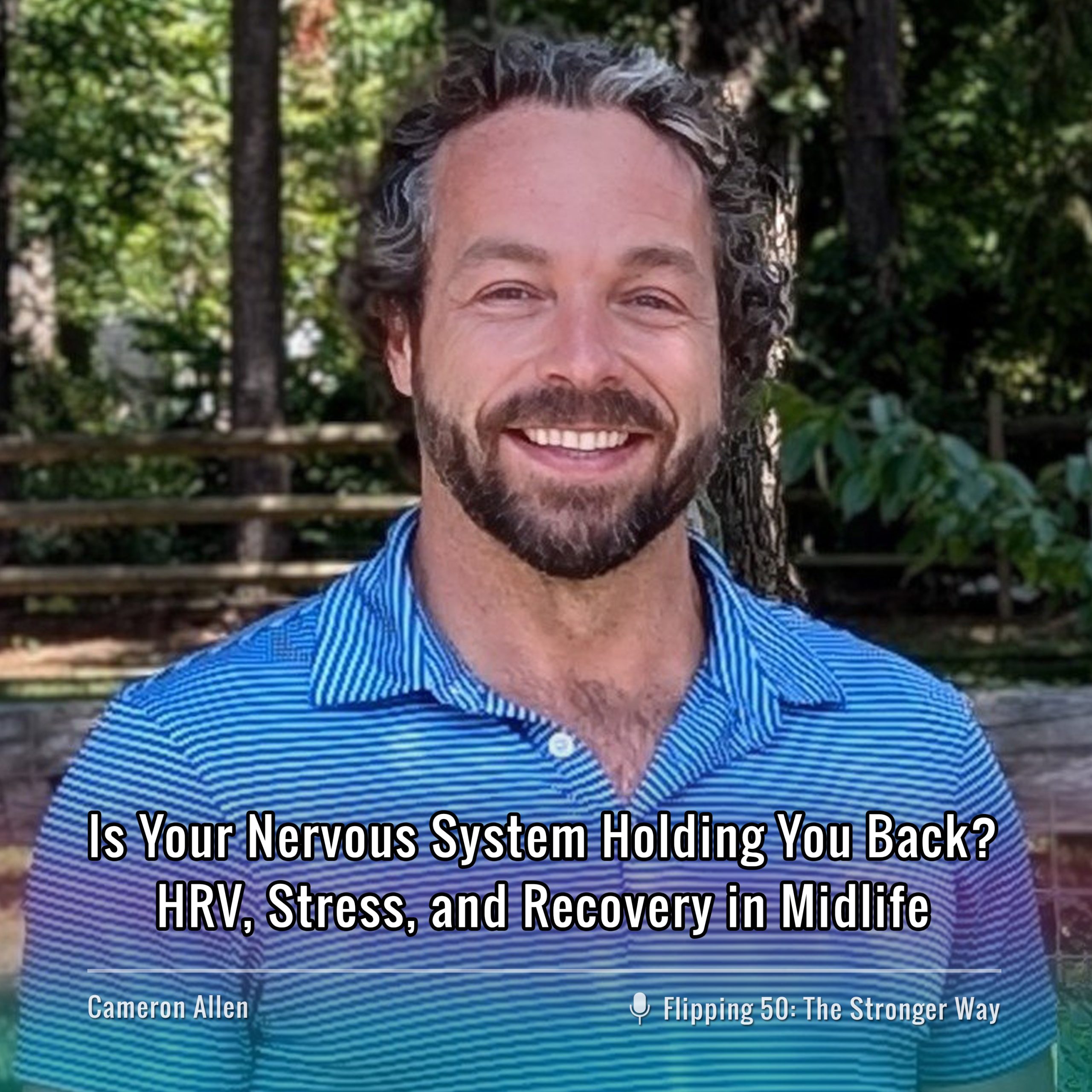
Cameron Allen is the founder of Neuro Progeny, where he builds capacity training programs for women navigating perimenopause and menopause. He brings 18 years in neuroimaging, more than 8,000 brain scans reviewed, and peer-reviewed research published alongside clinicians and geneticists. His work reframes fatigue as information about a woman’s metabolic budget rather than an obstacle to push through, and treats HRV as a mirror on capacity rather than a score to chase.
Questions We Answer in This Episode:
- [00:00:00] How did your career journey lead you to the work you do today?
- [00:00:00] What is HRV, and what can it tell us about nervous system resilience and recovery?
- [00:00:00] What is a “metabolic budget,” and how does the body allocate its available energy?
- [00:00:00] How can we increase our metabolic budget instead of continually pushing harder?
- [00:00:00] How can we reconnect with the version of ourselves who feels most alive and capable?
- [00:00:00] How can breathing practices support HRV and nervous system regulation?
- [00:00:00] Do we really need more grit, or do we need to build greater capacity?
Nervous System Recovery in Midlife and Why Your Body Needs More Rest
Your Symptoms Are Information, Not Failure
- Your current experience is information you can use to make more informed decisions about what you need next.
- Your brain and nervous system are associated with the symptoms we experience.
- Reframe fatigue and other symptoms — consider what they may be communicating about your current state and needs.
- Replace shame with curiosity.
HRV Reveals Nervous System Resilience
- Heart Rate Variability (HRV) measures the variation in time between consecutive heartbeats.
- An indicator of the nervous system’s ability to recover from stress.
- A lower reading may indicate that your body is under greater strain.
- A higher reading can suggest greater recovery capacity.
- Understand the relationship between recovery and performance.
- Recognize the role of stress. Arguments, worries, and other stressful experiences can keep the body’s stress response activated, particularly when your mind continues revisiting the experience.
Why Your Recovery Score Shouldn’t Become Another Source of Stress
- Sleep, life stress, recent exercise, and alcohol consumption can all influence recovery-related measurements.
- Avoid turning metrics into a pass-or-fail test.
- Pay attention to how you actually feel.
- Challenge the assumption that more effort is always better.
How Your Internal Stories Can Keep You Stuck in Stress
- Recognize the connection between expectations and stress.
- Notice recurring negative narratives.
- Understand how beliefs shape attention.
- Interrupt the automatic response.
- Use curiosity to create new possibilities.
Nervous System Recovery in Midlife Without Pushing Harder or Ignoring Fatigue
A Simple Exercise to Reconnect With Your Best Self
Try it yourself:
- Think of a time when you felt like the best version of yourself.
- Choose three words that describe how you showed up during that time. Examples include curious, adventurous, empathetic, or spontaneous.
- Pause and notice what happens in your body as you reflect on those qualities.
- Compare that experience with how you feel when you’re criticizing yourself or focusing on what you believe you’re doing wrong.
- Return to those three words when you notice yourself slipping into familiar patterns of self-criticism.
Breathing, HRV, and the Concept of Coherence
- Breathing is worth exploring as a practical way to develop greater awareness of your stress response.
- Explore resonant breathing.
- Understand the general breathing range discussed.
- Learn the concept of coherence. The conversation explores the relationship between breathing rhythms, heart rate patterns, and the body’s regulation processes.
- Recognize the value of recovery.
Recovery Deserves as Much Attention as Exercise
- Recovery isn’t an optional reward for working hard. It’s an important part of the process of building and maintaining physical capacity.
- Reconsider the habit of pushing harder.
- Recognize when stress becomes familiar.
- Understand the potential cost of constant effort.
- Build awareness before changing behavior.
Build Stress Capacity With Nervous System Recovery in Midlife and Better Rest
Build Capacity Instead of Relying on Willpower Alone
- Developing resilience isn’t only about tolerating more. It’s also about creating enough capacity to be present, make decisions, and experience connection.
- Shift the goal from enduring stress to building capacity.
- Separate what you can control from what you cannot.
- Make room for joy.
- Practice being present.
- Notice resistance to positive experiences.
Recognize Your Body’s Signals Before Automatically Pushing Through
- Notice physical sensations.
- Observe the thoughts that follow.
- Replace self-judgment with curiosity.
- Reassess what progress requires.
- Reconnect with yourself.
The Bigger Lesson: Listen, Reflect, and Respond
- Lasting change may begin with a different understanding of what your body and mind need, rather than another demand to do more.
- Revisit the ideas that resonate.
- Look beyond the obvious solutions.
- Explore further.
Practical Takeaways to Apply This Week
Here are five ways to put the conversation into practice:
- Check in before your workout. Consider your sleep, stress, and how you feel.
- Treat your metrics as feedback.
- Identify three words that describe you at your best.
- Write down three things you want to experience each morning.
- Pause before pushing through.
Connect with Cameron:
- Website – Neuro Progeny
- Facebook – Neuro Progeny
- Instagram – @neuro.progeny
- LinkedIn – Cameron Allen
Stop Chasing Recovery Scores and Focus on Nervous System Recovery in Midlife
Connect with Flipping 50:
- Facebook Group – Flipping50 Insiders
- Instagram – @Flipping50TV
- YouTube – @Flipping50TV
- More Episodes – Flipping 50 The Stronger Way
Other Episodes You Might Like:
- Previous Episode – Is 15 Weeks Enough to Build Muscle PostMenopausal? Science Unpacked
- More Like This – Tired But Wired? Why You’re Exhausted But Can’t Shut Your Brain Off After 50
Resources:
- Work with Debra with an Ultimate Assessment
- Flipping 50 App on iOS App Store & Google Play
- Questions / Contact Debra on Instagram or Facebook Group
- FLIP Menopause program – Join the next live cohort
- Flipping 50 Master class – Choose your session here