Toxins in everyday life may be hiding in places you’d never think to look.
What if the exposures affecting your health aren’t coming from your diet or workouts, but from the water you drink, the products you use, and the places where you exercise?
Let’s explore everyday environmental exposures, potential effects on hormones, and why women in midlife may want to take a closer look at their cumulative exposure.
This episode offers practical ways to become more aware of hidden toxins in everyday life without giving up the activities that support a stronger, healthier life.
My Guest:
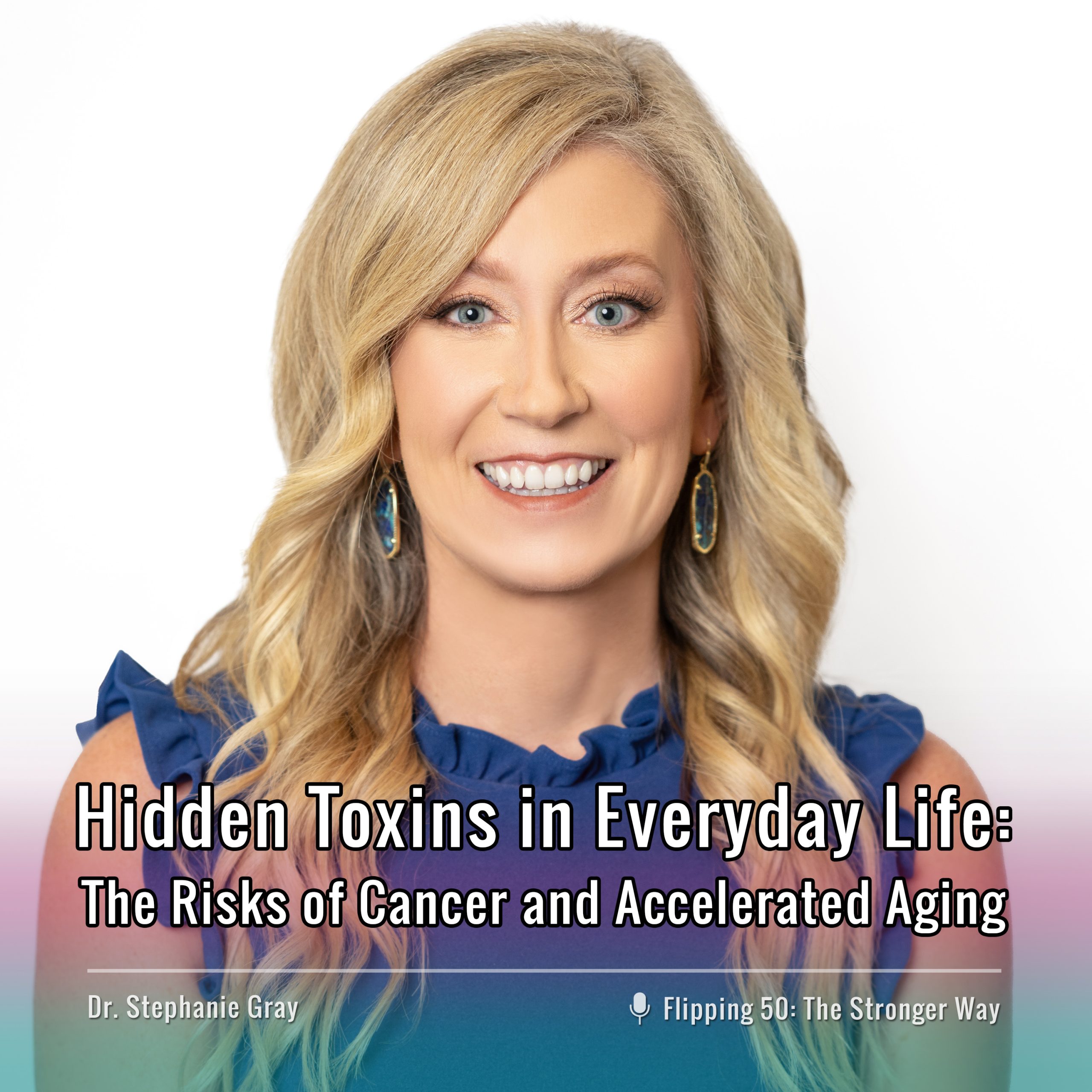
Dr. Stephanie Gray, DNP, MS, ARNP, AGNP-C, ABAAHP, FAARFM, is a functional medicine provider who helps women and men build sustainable, optimal health and longevity. She specializes in helping midlife women restore optimal hormone levels so they can improve sleep, mood, body composition, and how they feel in their bodies.
Stephanie is the Amazon best-selling author of Your Longevity Blueprint and Your Fertility Blueprint, with Your Hormone Blueprint soon to launch. She is also the host of the Your Longevity Blueprint podcast and co-founder of Your Longevity Blueprint Nutraceuticals and the Integrative Health and Hormone Clinic in Hiawatha, Iowa.
Questions We Answer in This Episode:
- [00:04:02] Could everyday exposures be adding up?
- [00:05:15] What do agricultural chemicals have to do with health?
- [00:07:15] Is your drinking water as clean as you think?
- [00:10:28] Could your water bottle affect your hormones?
- [00:11:18] Should you think twice about swimming in pools or lakes?
- [00:14:54] Are outdoor activities exposing you to more than you realize?
Understanding Toxins in Everyday Life and Their Health Effects
The Cumulative Effect of Everyday Products
- Personal care products, including fragrances, shampoo, and toothpaste, may contribute to repeated exposure to different chemicals.
- Multiple small exposures may add up over time.
Agricultural Chemicals and Regional Risk
- Glyphosate is connected with agricultural exposure and reported non-Hodgkin lymphoma patterns.
- Atrazine and paraquat as other agricultural chemicals of concern.
- Exposure is not limited to farm workers. People living near agricultural areas or spending time outdoors during spraying and harvest seasons may also encounter environmental residues.
Drinking Water: What Does Your Filter Remove?
- Reverse osmosis (RO) is a drinking-water filtration option that can remove nitrates and many dissolved contaminants.
- Carbon filtration and RO do not remove exactly the same contaminants; choosing a system requires understanding what is present in the water and what the system is certified to reduce.
Nitrates and Water Safety
- Nitrate contamination is highlighted as a particular concern in some agricultural regions.
- Learn about the water used to prepare infant formula.
- The practical lesson is to identify local water-quality concerns and select treatment based on test results and the intended use.
Plastic Water Bottles and Hormone Disruption
- Dr. Gray discusses the potential for chemicals to migrate from plastic into water, particularly when plastic is exposed to heat.
- There are alternatives for plastic containers, use them.
- Reducing unnecessary heat exposure to plastic containers is a straightforward precaution, although the risk varies with the material and conditions of use.
Hidden Toxins in Everyday Life: Water, Plastics and Products
Chlorine Exposure: Tap Water and Swimming Pools
- Chlorine exposure can occur through treated water as well as swimming pools.
- There are benefits of swimming and exercise and there are concerns about repeated exposure to pool chemicals.
- Rinse off after swimming to remove pool water from the skin.
- Dr. Gray discusses reducing chlorine exposure without giving up exercise.
Swimming in Lakes Near Agricultural Land
- Runoff from agricultural land may carry chemicals into nearby bodies of water.
- Before swimming, especially with children, check local water-quality advisories.
- Water-quality concerns can include microbial contamination as well as agricultural pollutants.
- A lake’s appearance alone cannot establish that its water is safe for swimming.
Toxin Exposure, Body Fat, and Fluid Retention
- Dr. Gray explains the relationship between toxin exposure, fat storage, and fluid retention.
- Reducing toxic burden coincides with changes in swelling and body weight.
- These explanations should be understood as the guest’s clinical perspective, not as proof that unexplained weight gain or difficulty losing fat is caused by toxins. Weight and fluid changes can have many causes and may require medical evaluation.
Aging, Menopause, and the Body’s Capacity to Handle Exposures
- Age-related changes in the body’s ability to process and eliminate certain substances may influence vulnerability to environmental exposures.
- Consider environmental exposures as one part of a broader health picture that also includes sleep, nutrition, physical activity, and appropriate medical care.
What Women Over 50 Need to Know To Reduce Toxins in Everyday Life
Practical Ways to Reduce Everyday Exposure
- Check your water: Review local water-quality information and choose filtration suited to the contaminants identified.
- Adjust outdoor timing: When possible, avoid exercising immediately near active agricultural spraying or during dusty fieldwork.
- Protect indoor air: Consider keeping windows closed during nearby spraying events, as discussed in the episode.
- Be mindful of treated grounds: Take local pesticide use into account around golf courses and other managed landscapes.
- Stay informed: Use local environmental and public-health advisories to guide decisions about swimming and outdoor recreation.
- Focus on manageable changes: The goal is to reduce avoidable exposure while continuing the habits that support health, strength, and longevity.
Connect with Dr. Stephanie:
- Book – Your Hormone Blueprint
- Facebook – Dr. Stephanie Gray and Integrative Health and Hormone Clinic
- Instagram – @stephaniegraydnp
- Youtube – @YourLongevityBlueprint
Toxins in Everyday Life: What You May Be Missing After 50
Connect with Flipping 50:
- Facebook Group – Flipping50 Insiders
- Instagram – @Flipping50TV
- YouTube – @Flipping50TV
- More Episodes – Flipping 50 The Stronger Way
Full Episode with Dr. Stephanie Gray:
Resources:
- Work with Debra with an Ultimate Assessment
- Flipping 50 App on iOS App Store & Google Play
- Questions / Contact Debra on Instagram or Facebook Group
- FLIP Menopause program – Join the next live cohort
- Flipping 50 Master class – Choose your session here