This episode is sponsored by AquaTru Shower and Alloy.
- AquaTru Shower – Unlock your hair & skin’s true potential with 20% Off AquaTru Shower using promo code SHFLIPPING50 at https://aquatrushower.com . It comes with a 30-day money back guarantee
- Alloy – Spoiler: you can feel amazing in menopause. Visit https://myalloy.com and use code FLIPPING50 for 20% off your first order!
Women need to know about midlife lab tests, aging, and the health changes that can show up after 50.
From testosterone and thyroid labs to muscle strength, bone health, and the impact of everyday toxins, this conversation challenges women to look beyond the standard checkup.
Understanding your hormone levels, asking better questions, and paying attention to what goes into your body may matter for long-term health.
If you’re in midlife or beyond and want to understand what your body is actually telling you, it’s time to look closer at midlife lab tests.
My Guest:
Dr. Stephanie Gray, DNP, MS, ARNP, AGNP-C, ABAAHP, FAARFM, is a functional medicine provider who helps women and men build sustainable, optimal health and longevity. She specializes in helping midlife women restore optimal hormone levels so they can improve sleep, mood, body composition, and how they feel in their bodies.
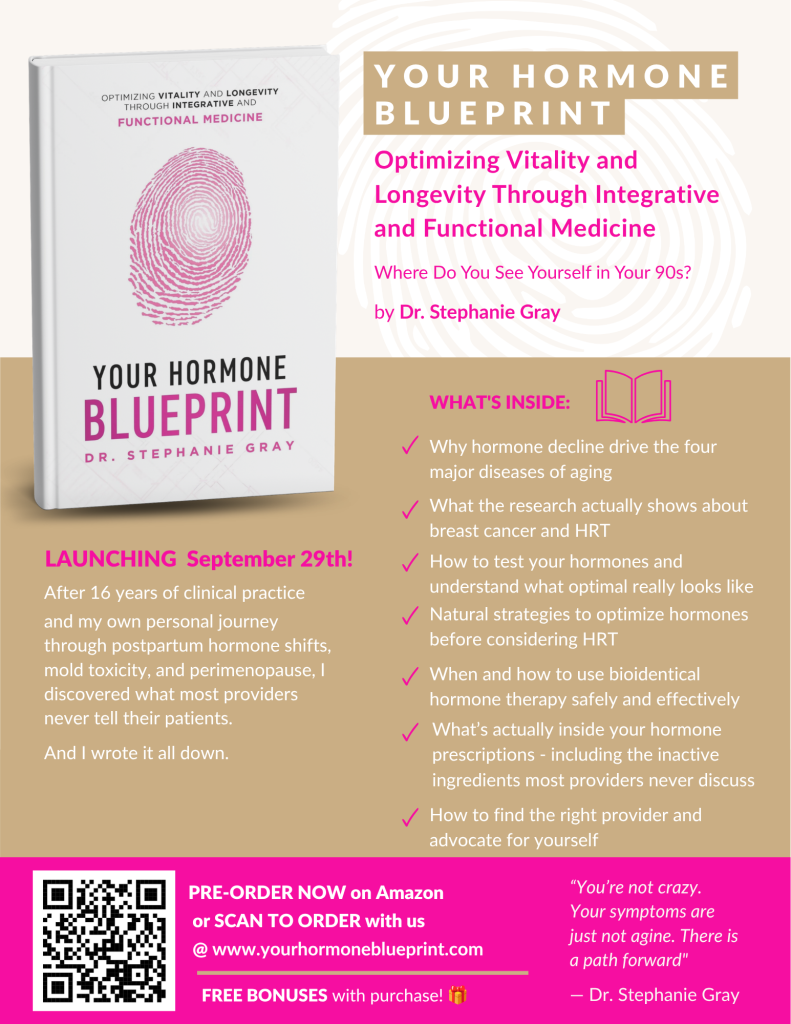
Stephanie is the Amazon best-selling author of Your Longevity Blueprint and Your Fertility Blueprint, with Your Hormone Blueprint soon to launch. She is also the host of the Your Longevity Blueprint podcast and co-founder of Your Longevity Blueprint Nutraceuticals and the Integrative Health and Hormone Clinic in Hiawatha, Iowa.
What Your Hormones and Metabolism Are Telling You Through Midlife Lab Tests
Questions We Answer in This Episode:
- [00:09:41] What can standard lab work reveal about your health and hormones?
- [00:13:05] Are women getting enough information from routine hormone testing?
- [00:22:17] Should women test their hormones before they have a problem?
- [00:25:11] What could be the hormonal bottleneck when you’re lifting and eating protein but not gaining muscle?
- [00:27:13] What labs beyond glucose could help explain metabolic changes?
- [00:29:13] What else is actually in your hormone replacement products?
- [00:36:25] What can functional medicine add to a woman’s longevity strategy?
Aging Faster Than Your Birthday
- Aging is not just about chronological age; consider looking at your biological age.
- Silent or easily overlooked changes include:
- Declining grip strength.
- Taking longer to recover from a hard workout.
- Consistently waking at 3 a.m.
- Loss of the outer third of the eyebrows.
- Increasing visceral fat even when the scale stays the same.
- Pay attention to measurable changes in strength, recovery, sleep, and body composition—not just your birthday.
Muscle Strength Matters For Healthy Aging
- Muscle is a critical organ of longevity because it supports independence, movement, and the ability to perform everyday tasks.
- The importance of strength, agility, stability, and mobility—not just bone density—in reducing the consequences of falls and maintaining quality of life.
- Hormones play a role in maintaining muscle and bone, but hormone therapy does not automatically produce muscle gains.
- Exercise and adequate protein remain essential for building and maintaining muscle.
- Grip strength and the sit-to-stand test can provide useful information about physical function.
Midlife Lab Tests Every Woman Should Know for Hormone Health
Lab Tests Can Reveal What’s Happening Beneath The Surface
- Standard blood work may not provide the full picture of metabolic and hormone health.
- Fasting insulin is a useful marker because insulin resistance may develop before blood glucose becomes abnormal.
- Valuable lab tests for consideration:
- Fasting glucose.
- Hemoglobin A1C.
- Fasting insulin.
- Magnesium and electrolytes.
- A continuous glucose monitor (CGM) can offer real-time information about individual blood sugar responses to foods.
What’s hiding in your hormone products?
- Be aware of inactive ingredients in hormone creams, gels, patches, capsules, and other formulations. Including the following:
- Methylparaben in some commercially available vaginal estrogen creams.
- TBHQ, a synthetic preservative, in some creams.
- Synthetic dyes, including Red Dye No. 40.
- Titanium dioxide in certain products.
- There are potential effects of heat on estrogen patches, especially when using a sauna.
Environmental Toxins Affect Hormones, Weight, And Aging
- Hormone health is not just about what your body produces. Your environment and exposures are also part of the larger conversation.
- Environmental exposures include:
- Pesticides and herbicides.
- Mold.
- Chlorine.
- Chemicals in everyday products.
- There is a relationship between toxin exposure, fat storage, and difficulty losing weight.
- Age and hormone changes are factors that may affect the body’s ability to adapt to environmental exposures.
Reduce Exposure To Toxins
- You may not be able to eliminate every exposure, but you can become more aware of the products and environments you encounter:
- Water quality.
- Chlorine exposure.
- Saunas.
- Personal care products.
- Pesticides and herbicides.
Connect with Dr. Stephanie:
- Book – Your Hormone Blueprint
- Facebook – Dr. Stephanie Gray and Integrative Health and Hormone Clinic
- Instagram – @stephaniegraydnp
- Youtube – @YourLongevityBlueprint
Midlife Lab Tests for Hormones, Thyroid, Insulin, and Metabolic Health
Other Episodes You Might Like:
- Previous Episode – Can’t Lose Belly Fat After Menopause? Your Sleep May Be Why
- Next Episode – Can Shorter Sets Build Strength After Menopause? New Research on Reps, Power & Fatigue
- More Like This – Two Fitness Tests Your Doctor Might Do Soon (start now!): Fitness is a Vital Sign
Resources:
- Not sure you’re doing what is best for you right now? Get a 90-Minute Ultimate Consultation with Debra. Together, you formulate the actual plan that will work for you!
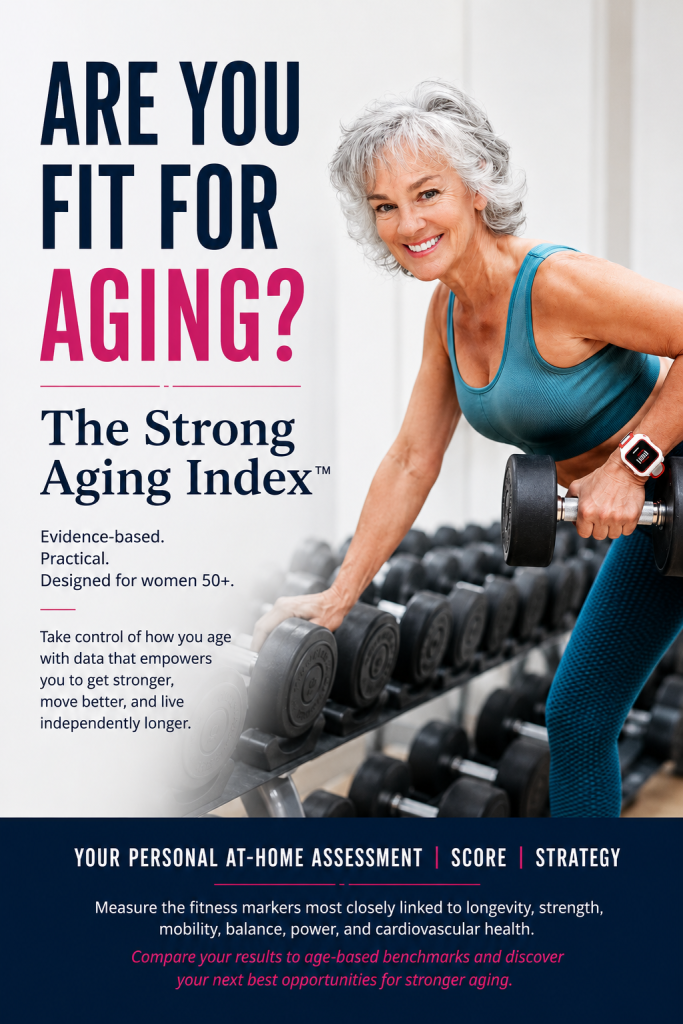
- Use Flipping 50 Strong Aging Index to measure what matters with an easy at-home self-assessment test you can do in minutes.
Your Hormone Blueprint Book – A functional medicine guide to hormone optimization — and why it’s one of the most powerful longevity tools we have.