Menopause medicine has changed, and sticking to outdated rules about your hormones and workouts will only leave you depleted and frustrated.
Let’s reveal what the latest science actually says about bioidentical hormones, muscle preservation, and long-term vitality.
You’ll discover why high-volume cardio is working against your body, how to treat muscle as your ultimate health savings account, and why advanced diagnostics can transform your health strategy.
Know how menopause medicine has changed so you can step into your strength and thrive in your second half!
My Guest:
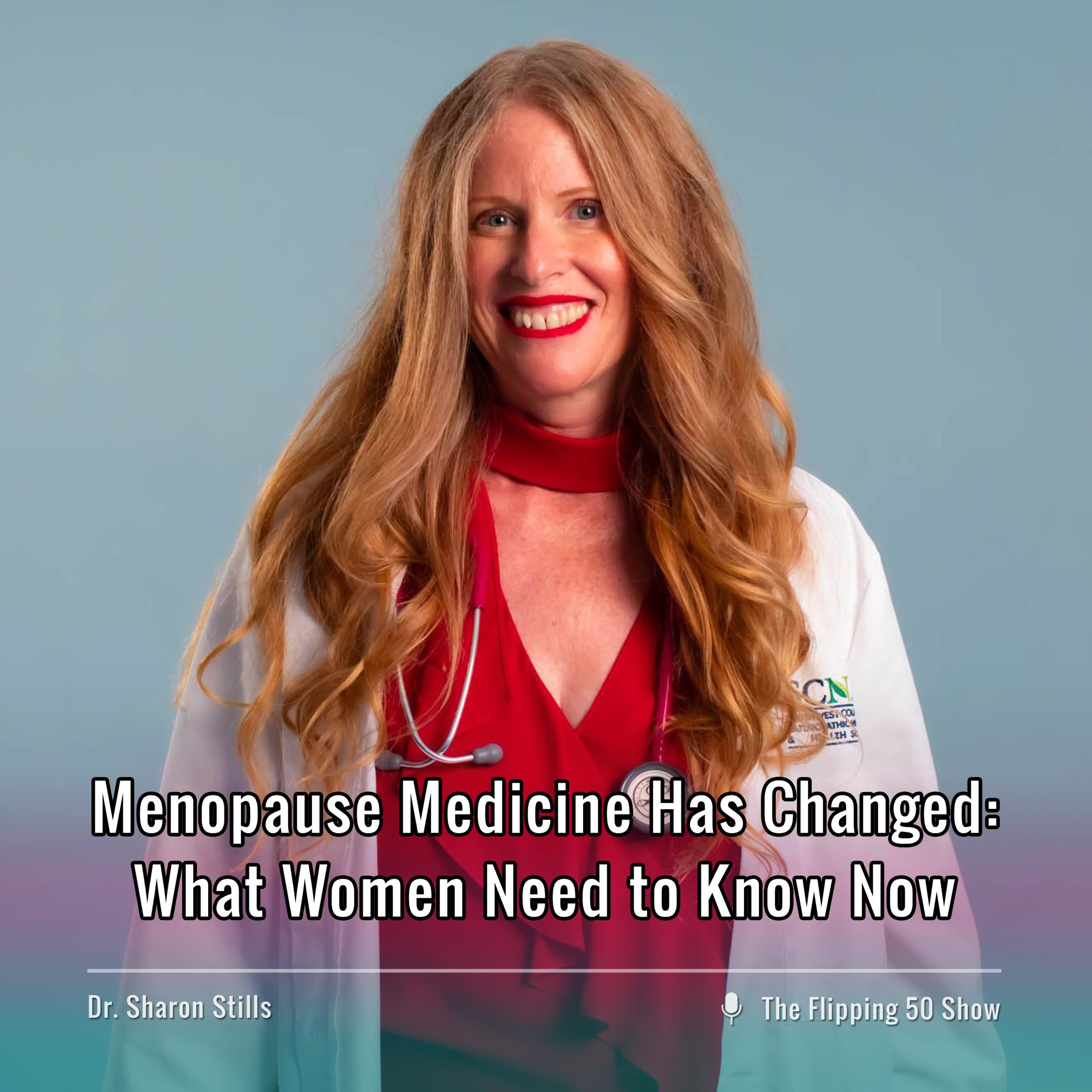
Dr. Sharon Stills is a Naturopathic Medical Doctor providing comprehensive health care, therapeutic and diagnostic services to patients worldwide. She combines her conventional medical training, data-driven science, cutting-edge diagnostic tools and a deep knowledge of natural healing to effectively identify and treat health concerns ranging from allergies to end stage cancer, and everything in between.
Menopause Medicine Is Changing, But Are You Getting New Answers?
Questions We Answer in This Episode:
- [00:06:07] What is the current “state of the union” for menopause medicine, and why are conventional approaches still missing the mark?
- [00:13:40] What is the truth behind the FDA lifting black box warnings on estrogen, and what does increased access mean for women?
- [00:16:19] When a patient suffers from exhaustion, brain fog, and weight gain, what do you look at and address first?
- [00:20:37] With your global travel for medicine, what criteria make a new, non-invasive diagnostic tool noteworthy for your practice?
- [00:25:10] How do lab markers compare between midlife women who lift heavy weights and those who do not? Is resistance training something you formally prescribe to midlife patients as part of their treatment plan?
- [00:30:25] After years of serving women, what recent insights or shifts have transformed how you practice?
- [00:33:28] What is something you’ve changed your mind about regarding midlife women’s health from your early career to today?
- [00:35:08] Why do you host your annual summit, and what is the main takeaway you hope women gain from attending?
Hormones Aren’t the Whole Answer—But They Matter
- Menopause care shouldn’t be reduced to one pill, one supplement, or one “root cause.”
- Hormone care should exist alongside:
- Movement and exercise
- Sleep
- Hydration and nutrition
- Nervous system regulation
- Purpose, connection, and joy
- Gut and lymphatic health
- Other aspects of whole-person health
- Hormone deficiency itself needs to be recognized rather than explaining every menopause symptom away as a nutritional, toxic, or lifestyle issue.
Menopause Medicine Still Has Some Outdated Thinking
Feeling “Off” in Midlife? Look Beyond the Symptom
- Symptoms such as poor sleep, weight changes, brain fog, and difficulty concentrating can have multiple potential contributors.
- Hormone treatment should be evaluated in the context of the body’s overall “terrain.”
- Being on hormone therapy doesn’t automatically mean the treatment is optimized.
- Important variables can include:
- The type of hormone
- Dose
- Route of administration
- Monitoring
- How the body is responding
- Both how a woman feels and what her laboratory results show matter when evaluating hormone treatment.
Muscle Is More Than Something You See in the Mirror
- Muscle strength and muscle quality become increasingly important priorities after 40.
- Resistance training can influence multiple aspects of health, including:
- Blood glucose regulation
- Weight management
- Mood
- Immune function
- Flexibility and physical function
- Lymphatic and fascial health
- Hormones and movement shouldn’t be treated as separate pieces of healthcare.
- Muscle is framed as a long-term health investment—a “retirement account” for the body.
Menopause Is Not the End of the Story
- Menopause can be viewed as a transition into greater wisdom, power, and self-awareness rather than simply a period of decline.
- Dr. Stills challenges the cultural obsession with “anti-aging” and instead embraces pro-aging.
Menopause Medicine Can’t Ignore Hormones, Movement, Sleep, or Joy
The Goal Isn’t Just Better Labs—It’s a Better Life
- Dr. Stills identifies two priorities she hopes women take away from her work:
- Get hormones properly evaluated and appropriately prescribed.
- Pay attention to who you are, how you’re living, and where you’re finding joy.
- Small, ordinary moments—moving your body, noticing the day, breathing, gratitude, and being present—can have enormous value.
- The ultimate goal of menopause care isn’t simply to “fix” symptoms or chase perfect numbers. It’s to support a woman in feeling well enough to fully participate in her life.
Connect with Dr. Anne:
- Join the Dr. Sharon’s The Future Of Meno(pause) Medicine Summit: Uncensored. Unconventional. Unapologetic on September 12–16, 2026 for FREE.
- Instagram – @drsharonstills
Menopause Medicine Meets Muscle, Movement, and Midlife Strength
Other Episodes You Might Like:
- Previous Episode – Do you have PMOS? What It Might Be Doing to Hormones & Metabolism
- Next Episode – The Midlife Thyroid Epidemic Nobody Talks About
- More Like This – What You Don’t Know About Hormone Testing (Wish I’d Knew This Sooner!)
Resources:
- Not sure you’re doing what is best for you right now? Get a 90-Minute Ultimate Consultation with Debra. Together, you formulate the actual plan that will work for you! Currently 1/2 off for podcast listeners.
- Use Flipping 50 Active Aging Index to measure what matters with an easy at-home self-assessment test you can do in minutes.
- Join the Dr. Sharon’s The Future Of Meno(pause) Medicine Summit: Uncensored. Unconventional. Unapologetic on September 12–16, 2026 for FREE.