This episode is sponsored by AirDoctor.
- AirDoctor – Head to https://AirDoctorPro.com and use promo code FLIPPING50 and get up to $300 off ANY of their select AirDoctor models, plus you will get a 3-year warranty, absolutely FREE! All AirDoctor air purifiers come with a 30-day money-back guarantee.
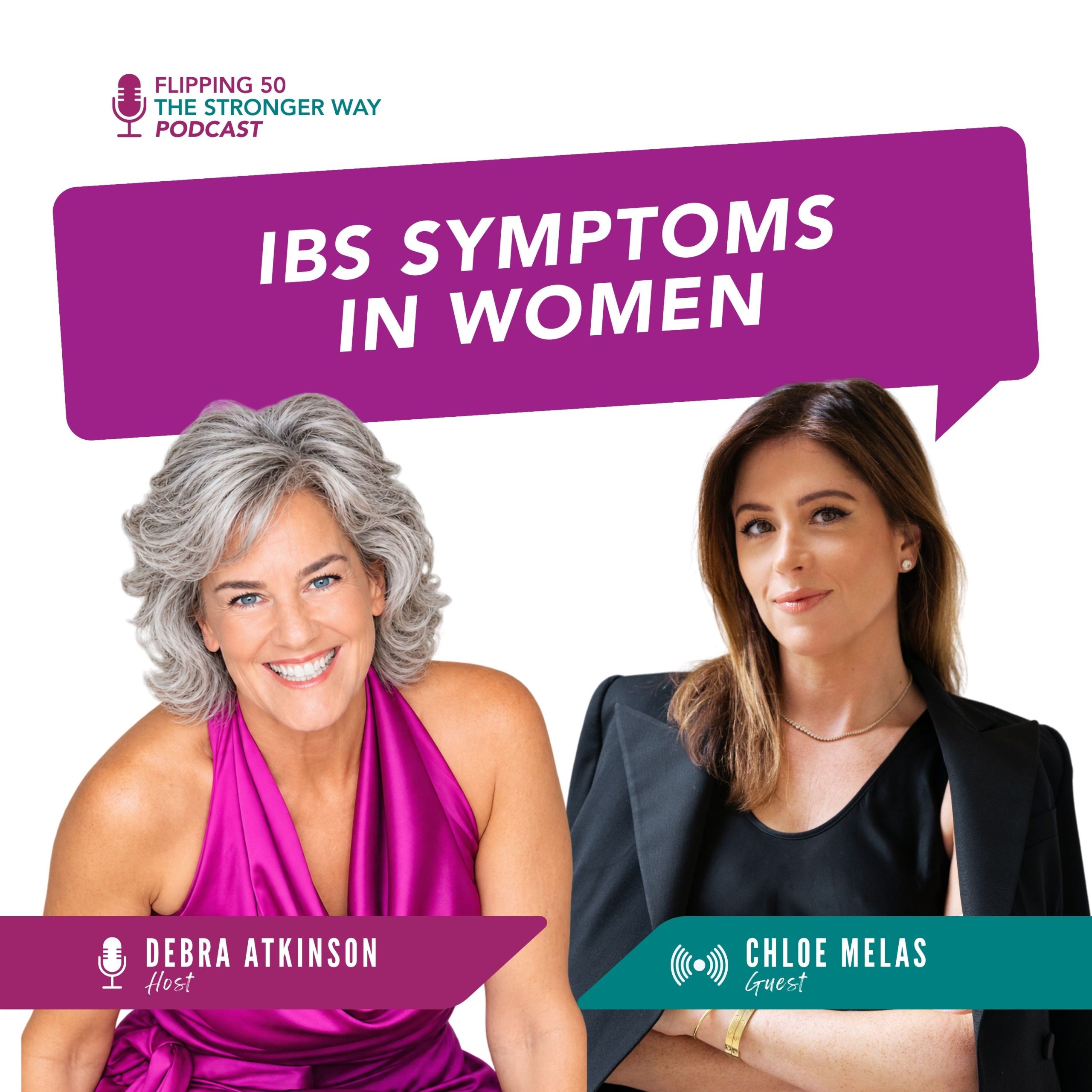
IBS symptoms in women are often dismissed.
Could your gut be telling you something you’ve been overlooking?
What is IBS and how is it unique from IBD?
Women experience dramatic gut changes due to hormonal change. How do you know if you’re just tolerating constipation, diarrhea or have something with causation that is treatable?
If you’re ready to stop guessing and start understanding IBS symptoms in women, today’s guest is here to share her personal experience. A conversation you don’t want to miss.
My Guest:
Chloe Melas is an award-winning journalist and on-air correspondent who over her 17-year career worked for NBC News, appearing across TODAY, NBC Nightly News, and NBC News Now.
Questions We Answer in This Episode:
- [00:05:00] Are bloating, constipation, and digestive discomfort really normal in midlife?
- [00:06:30] How long can you tolerate digestive symptoms before seeking help?
- [00:08:20] What’s the difference between IBS and IBD?
- [00:12:11] How do you know if it’s ibs or something that needs medical attention?
- [00:13:25] How do food triggers, stress, and everyday life affect gut symptoms?
- [00:19:34] Why might women experience more digestive issues than men?
- [00:24:51] What can stool testing and better self-advocacy teach you about gut health?
IBS Symptoms in Women and the Important Difference Between IBS and IBD
Stop Accepting Digestive Problems as Normal
- Constipation, diarrhea, bloating, gas, and irregular bowel movements are frequently normalized, especially among women.
- Women may self-diagnose food sensitivities or try elimination diets without investigating the underlying cause.
- Digestive symptoms can change as women move through their 40s, 50s, and beyond.
- Hormonal transitions may contribute to changes in gut function and digestive comfort.
- Persistent symptoms deserve attention rather than years of acceptance or avoidance.
IBS vs IBD
IBD – Inflammatory Bowel Disease
- An actual inflammatory disease involving the digestive tract.
- Involves the immune system attacking the bowel.
- Requires medical evaluation, including colonoscopy to assess the colon.
- Treatment may involve medications such as steroids or biologic medications.
- Can involve periods of active symptoms, known as flares, and periods of remission.
- Symptoms may include abdominal pain, diarrhea, and even constipation.
- Two major forms of IBD:
- Ulcerative colitis: Affects the colon.
- Crohn’s disease: Can affect anywhere from the mouth to the anus.
IBS – Irritable Bowel Syndrome
- A functional gastrointestinal syndrome rather than an inflammatory bowel disease.
- Can involve constipation, bloating, abdominal discomfort, and urgency.
- Symptoms can vary considerably from one person to another.
- Thought to involve communication problems between the digestive and nervous systems.
- Can overlap symptomatically with IBD, making proper evaluation important.
IBS Symptoms in Women and the Surprising Gut Brain Connection
The Gut-Brain Connection Is More Important Than You Think
- The digestive system and nervous system communicate continuously.
- The vagus nerve plays an important role in this two-way communication.
- Gut health may be connected to symptoms beyond digestion, including brain fog, fatigue, and mood changes.
Getting the Right Diagnosis Requires More Than Guesswork
- A gastroenterologist can help determine whether symptoms are related to IBS or another gastrointestinal condition.
- Evaluation may include:
- Colonoscopy to investigate or rule out IBD.
- Testing for celiac disease.
- Evaluation for diverticulitis.
- Appropriate screening for colon cancer.
- Identifying food triggers may require a structured elimination diet.
- Elimination diets should follow a purposeful protocol rather than involve randomly removing foods.
- Hormonal changes during midlife can make digestive health and food tolerance more complicated.
Why Women May Experience More Digestive Issues
- Hormonal influences, including changes associated with menstruation, may contribute.
- Other factors include:
- Changes in the modern food supply.
- Highly processed foods.
- Pesticides and microplastics.
- Changes in micronutrient intake.
- The hygiene hypothesis and its potential influence on the microbiome.
Stool Testing What Your Gut May Be Telling You
- Stool testing can provide information about microbiome diversity and other digestive markers, depending on the test.
- The Bristol Stool Chart provides a way to classify stool consistency.
- Blood in the stool should not be ignored.
- Your bowel movements can provide useful clues about your health. Pay attention to changes rather than treating them as embarrassing or unimportant.
Understanding IBS Symptoms in Women Beyond Bloating and Digestive Discomfort
Fiber Is Not One-Size-Fits-All
- Psyllium husk absorbs water and forms a gel-like substance.
- Prebiotic fibers can help feed beneficial gut bacteria.
- Some fiber supplements may cause more gas or bloating depending on the person and the type of fiber.
- Increasing fiber too quickly may also contribute to digestive discomfort.
- More fiber isn’t automatically better. Find the type and amount your digestive system tolerates.
Gut Health Starts With Everyday Food Choices
- Fruits and whole foods are important parts of her family’s eating habits.
- Limit highly processed foods
- Balanced approach rather than expecting perfection or eliminating every treat.
Practical Habits Recommended by Chloe
- Walk for 15–20 minutes daily when possible.
- Aim for approximately eight hours of sleep.
- Pay attention to fiber intake.
- Stay current with appropriate colonoscopy screening.
- Consider whether stool testing is appropriate with professional guidance.
- Incorporate mindfulness and breathing practices.
Connect with Chloe:
- Book – The Girl’s Guide to Guts
- Instagram – @chloemelas
- LinkedIn – Chloe Melas
IBS Symptoms in Women and the Gut Clues You Shouldn’t Ignore
Connect with Flipping 50:
- Facebook Group – Flipping50 Insiders
- Instagram – @Flipping50TV
- YouTube – @Flipping50TV
- More Episodes – Flipping 50 The Stronger Way
Other Episodes You Might Like:
- Previous Episode – Does Heavy Outperform Moderate In Building Muscle After 50
- Next Episode – Do You Need Extra Leucine To Build Muscle After 50?
- More Like This – The Menopause Gut: Hidden Reasons Symptoms Happen Exercise Won’t Fix
Resources:
- Work with Debra with an Ultimate Assessment
- Flipping 50 App on iOS App Store & Google Play
- Questions / Contact Debra on Instagram or Facebook Group
- FLIP Menopause program – Join the next live cohort
- Flipping 50 Master class – Choose your session here