This episode is sponsored by Alloy and AquaTru.
- Alloy – Alloy is the only menopause platform with a scalp-to-lash hair care solution. Visit https://myalloy.com and use code FLIPPING50 for 20% off your first order!
- AquaTru – Go to https://AquaTru.com/ now for 20% off (your purifier) using promo code FLIPPING50. AquaTru even comes with a 30-day best-tasting water guarantee.
Building muscle after 50 doesn’t mean you have to lift heavier every time you walk into the gym.
What if moderate weights and higher repetitions could deliver similar results?
A 2026 study involving women averaging 68 years old offers an interesting perspective on how we approach resistance training as we age. The findings challenge the idea that heavier is always better and highlight why effort, progression, and individual needs matter more than simply increasing the weight.
Discover how to choose the right resistance, build muscle after 50 safely, and make strength training work for your body and your life.
Questions We Answer in This Episode:
- [00:01:37] Is lifting heavier really more effective than using moderate weights for building muscle after 50?
- [00:02:18] What did the study comparing 10-rep and 15-rep resistance training reveal about muscle growth in older women?
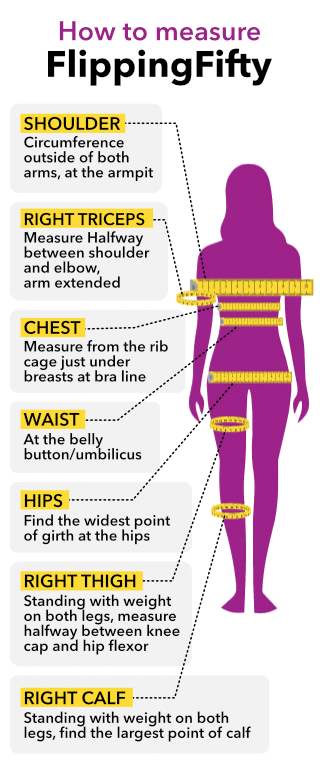
- [00:04:00] How can you tell whether your strength training is building muscle, and are you measuring the right numbers?
- [00:13:39] What’s the difference between increasing muscle size and improving maximal strength?
- [00:15:33] When should you increase your weights, and why is mastering proper movement more important than rushing to lift heavier?
- [00:20:14] How can you adjust your resistance training after a break, illness, or time away from exercise?
- [00:21:38] What other ways can you challenge your muscles and measure progress without constantly increasing the weight?
Building Muscle After 50 With Heavy or Moderate Weights What Works
Research on Heavy vs. Moderate Weights
A 2026 study published in Experimental Gerontology examined whether heavier resistance produces greater muscle growth than moderate resistance in older women.
- Study participants: 27 women, averaging approximately 68 years old, completed two eight-week resistance-training periods.
- Two training approaches:
- 10-repetition maximum (10RM): A heavier weight that participants could lift no more than 10 times.
- 15-repetition maximum (15RM): A lighter weight that participants could lift no more than 15 times.
- Participants completed the two training periods in randomized order, with a 12-week break between them.
- Both approaches involved working toward temporary muscle failure, meaning participants could not complete another repetition at the prescribed load.
What Happened to Muscle Mass With 10 vs 15 Repetitions?
- Both training approaches increased estimated skeletal muscle mass.
- 10-repetition maximum: Approximately 0.43 kg increase.
- 15-repetition maximum: Approximately 0.62 kg increase.
- Although the 15-repetition group showed a numerically greater increase, the difference was not statistically significant.
- The results do not establish that 15 repetitions outperform 10 repetitions for building muscle.
- Important distinction: A larger number does not automatically mean a better result. The study was relatively small, and the difference between the two approaches was not statistically meaningful.
Understand Skeletal Muscle Mass Measurements
- Skeletal muscle mass refers to the muscles involved in movement, including the biceps, triceps, chest, back, and legs.
- Fat-free mass is different because it includes other non-fat tissues in addition to skeletal muscle.
- Tracking skeletal muscle mass in actual pounds or kilograms provides a more useful picture of changes than relying only on percentages.
- Pay attention to what your training is changing, not just what the scale says.
Building Muscle After 50 Requires More Than Lifting Heavier Weights
Your Smart Scale May Not Tell the Whole Story
Bioimpedance scales can be influenced by hydration levels.
- Being well-hydrated can result in a higher estimated skeletal muscle mass reading.
- Dehydration can make the same muscle mass appear lower.
- A change in the scale reading does not necessarily mean you have gained or lost actual muscle.
A single measurement should not dictate changes to your training program.
Recommendation:
- Measure consistently under similar conditions.
- Look for trends across multiple measurements rather than reacting to one reading.
- Three or more measurements over time can provide a more useful indication of progress.
Individual Muscle-Building Results Are Different
- Not everyone responds to resistance training in exactly the same way.
- Some women gained more muscle than others in the study.
- Switching between heavier and moderate loads did not consistently turn non-responders into responders.
- Individual responses should not be used to label yourself as someone who cannot build muscle.
- Age and hormonal stage alone do not determine how much muscle another woman will gain.
You Have More Than One Effective Rep Range for Building Muscle
One of the most useful lessons from this research is that there is no single repetition range that everyone must follow.
- Challenging sets of 15 repetitions can be an effective starting point.
- Ten repetitions can also work when the resistance provides sufficient challenge.
- Beginners may benefit from 15–20 repetitions while developing technique and confidence.
- More experienced exercisers can continue incorporating lighter, moderate, and heavier resistance.
- Neither repetition range works simply by going through the motions.
What matters most:
- Sufficient effort during each set.
- Appropriate resistance for your current ability.
- Consistent training.
- Progression over time when needed.
What Women Should Know About Building Muscle After 50
Maintenance Is Also a Training Success
- Preserving muscle as you age helps counter the natural decline associated with aging.
- Maintaining your muscle and strength from age 60 to 70 is a meaningful achievement, not a failure to progress.
- Training can shift from continually increasing muscle mass to maintaining the results you’ve worked hard to achieve.
- Changing the training stimulus can help maintain results without constantly pushing for heavier loads.
Heavy, Moderate, and Light Weights All Belong in Your Program
- You don’t have to abandon lighter weights just because you’ve progressed to heavier ones. All three levels of resistance can have a place in a well-designed program.
- Rotating training loads gives you more ways to challenge your muscles without relying on one approach indefinitely.
- Moderate repetitions can be useful during lighter training weeks.
- Lighter resistance can help maintain consistency during periods when you’re more active outside the gym.
- Moderate loads can support a return to training after a break.
- Heavier resistance can be incorporated as your technique, strength, and capacity improve.
Muscle Growth and Maximal Strength Are Not the Same Goal
- Hypertrophy refers to increasing muscle size.
- Maximal strength refers to how much weight you can lift.
- The study examined estimated muscle mass, not whether both approaches produced equal improvements in maximal strength.
- A heavier 10-repetition maximum may be more relevant when the goal is developing the ability to lift heavier loads.
- Muscle mass also supports functional outcomes such as physical strength, energy, cognitive function, bone density, and reaction skills.
Can Moderate Resistance Training Support Building Muscle After 50?
Choosing Exercises That Support Everyday Strength
- Squat variation: Develops lower-body strength.
- Press: Such as a chest press, to train pushing strength.
- Pull: Such as a row or pull-up, to develop pulling strength.
How to Progress Resistance Without Rushing Into Heavier Weights
- Start with a weight you can control while learning proper movement technique.
- Complete the intended repetition range with good form.
- When you can finish the top of your repetition range with several repetitions still in reserve, consider increasing the resistance.
- Avoid jumping to substantially heavier weights before you have mastered the movement.
Why the First Six to Eight Weeks Matter
- For beginners, the initial six to eight weeks are an important period for developing neuromuscular coordination.
- Your brain is learning how to coordinate and control new movement patterns.
- Your nervous system becomes more efficient at signaling and recruiting muscle fibers.
- Balance, stability, and movement control develop with practice.
- Increasing weight too quickly does not accelerate this learning process.
- Start conservatively, build a solid foundation, and allow your body to develop the coordination needed for more challenging resistance.
Building Muscle After 50 And Understanding Muscle Growth Versus Strength
How to Return to Strength Training After a Break
- Moderate resistance can be a productive starting point when returning to exercise after illness, vacation, or a period away from training.
- Begin with a manageable load and assess how your body responds.
- Increase resistance gradually as your movement quality and capacity improve.
- A general rule of thumb discussed is increasing loads by approximately 5–10% every two weeks.
- This is not a universal prescription; your training history and injury risk should guide your decisions.
- Consider your individual circumstances:
- Joint health and limitations.
- Balance and stability.
- Previous injuries, strains, and sprains.
- Sensitivity to post-exercise aches and pains.
- Your experience with resistance training.
- The demands of the specific exercise.
Building Muscle After 50 What New Research Reveals About Rep Ranges
Connect with Flipping 50:
- Facebook Group – Flipping50 Insiders
- Instagram – @Flipping50TV
- YouTube – @Flipping50TV
- More Episodes – Flipping 50 The Stronger Way
References:
- Experimental Gerontology. 2026, PMID: 42551773.
Other Episodes You Might Like:
- Previous Episode – The C-Section Hangover that Shows Up as Back Pain or Painful Seggs in Menopause
- Next Episode – What Actually Is IBS? The Girl’s Guide to Guts
- More Like This – Is 15 Weeks Enough to Build Muscle PostMenopausal? Science Unpacked
Resources:
- Work with Debra with an Ultimate Assessment
- Flipping 50 App on iOS App Store & Google Play
- Questions / Contact Debra on Instagram or Facebook Group
- FLIP Menopause program – Join the next live cohort
- Flipping 50 Master class – Choose your session here
Easy At-Home Self-Assessment Test – Flipping 50 Strong Aging Index
Hot Off The Press! The science for staying strong.
If this episode made you flip your workout routine — share it!
👉 Post to your stories, tag @Flipping50TV in Instagram and share the episode to your best friend.
👉 Meet other women, who are done with outdated fitness advice, at Flipping50 Facebook Group.
👉 Subscribe, share, and leave a review if you’re ready to flip the script on Flipping 50 The Stronger Way.