This episode is sponsored by HERS.
HERS connects you with licensed healthcare professionals who create personalized treatment plans for your weight loss, hair growth, mental health, and skincare needs. Visit https://www.forhers.com/flipping to get your personalized treatment plan.
If you’re exercising but ending up sore, tired, or injured more often, this episode reveals what actually works for exercise recovery after 40.
I’m giving you another take on rest and recovery. It isn’t just about rest days—it’s about smarter, science-backed recovery that supports your changing hormones and connective tissue.
Your needs for exercise recovery after 40 isn’t exactly the same as everyone else. Know what works for you!!
The Estrogen-Connective Tissue Connection
- How declining estrogen affects tendon and ligament resilience.
- Why 70% of women in menopause experience musculoskeletal issues.
- Ignoring this can lead to “Musculoskeletal Syndrome of Menopause”, based on July 2024 research.
Recovery Time Reality Check
- Why muscles need 48-72 hours between resistance sessions after 40.
- The critical difference between muscle and connective tissue recovery.
Muscles get more blood flow; tendons and ligaments don’t. - Poor blood supply to ligaments and tendons slows healing.
The Foundational Exercise Formula
- Foundational exercise formula:
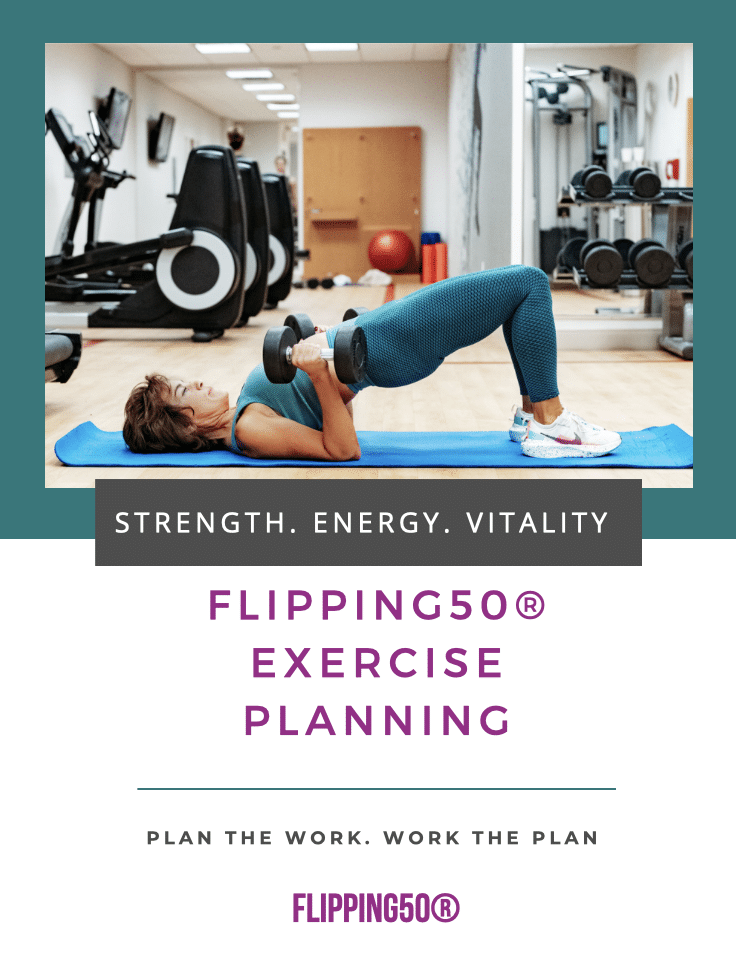
- 2 total-body resistance training sessions per week.
- 2 high-intensity interval or impact sessions per week.
- Daily mobility-focused movement and walking
- Strategic rest days for play and fun.
- More is not better — chronic fatigue or plateauing results often signal under-recovery.
- Adjusting workout frequency leads to better gains and fewer injuries.
Red Flags You’re Not Recovering
- Your usual walking route takes longer than normal.
- You’re reaching for lighter weights for the same exercises.
- You need a nap after your regular workout.
- Persistent soreness, aches, or recurring minor injuries.
Strategy and Support for Your Exercise Recovery After 40
Everyday Recovery Strategies
- Workout-specific warmups that actually prepare your connective tissue.
- Moving purposefully instead of frantically through exercises.
- Rest intervals that optimize results (1-3 minutes between sets).
- Adding mobility beyond just warmups and cooldowns.
- Using nutrition and sleep as recovery accelerators.
Nutrition, Sleep & Tools to Boost Recovery
- Nutrition and protein, especially post-workout and the next day.
Women over 40 often eat too little, which is not enough. - Brightly colored, nutrient-rich meals = better recovery and digestion.
- Whole Body Vibration (WBV) for activation (30-50 micro-contractions per second).
- Massage for passive movement of lymph and fascia.
Your Body Knows Best: Self-Assessment Over Technology
Stop giving all your power to wearables and trackers. Your body provides better feedback through:
- Appetite and cravings
- Sleep quality
- Energy levels throughout the day
- Mood and cognition
- Digestion and elimination
- Libido
- Soreness and recovery speed
- Presence of injuries or illness
References:
- International Journal of Molecular Sciences. 2023, PMID: 37894875.
- Climacteric. 2024, PMID: 39077777.
Other Episodes You Might Like:
- Previous Episode – How Healthy Skin Contributes to Healthy Aging
- Next Episode – Menopause Gut Health
- More Like This:
Resources:
- Join the Hot, Not Bothered! Challenge to learn why timing matters and why what works for others is not working for you.
- Use Flipping 50 Scorecard & Guide to measure what matters with easy at-home self-assessment tests you can do in minutes.
- Are you burning belly fat or burning out? Get the Menopause Fitness Guide to High-Intensity Interval Training to help you lose more fat and stay on track!
- Don’t know where to start? Book your Discovery Call with Debra. Leave this session with insight into exactly what to do right now to make small changes and smart decisions about your exercise time and energy.