This episode is sponsored by AquaTru.
- Go to https://AquaTru.com/Flipping50 now for 20% off (your purifier) using promo code FLIPPING50. AquaTru even comes with a 30-day best-tasting water guarantee.
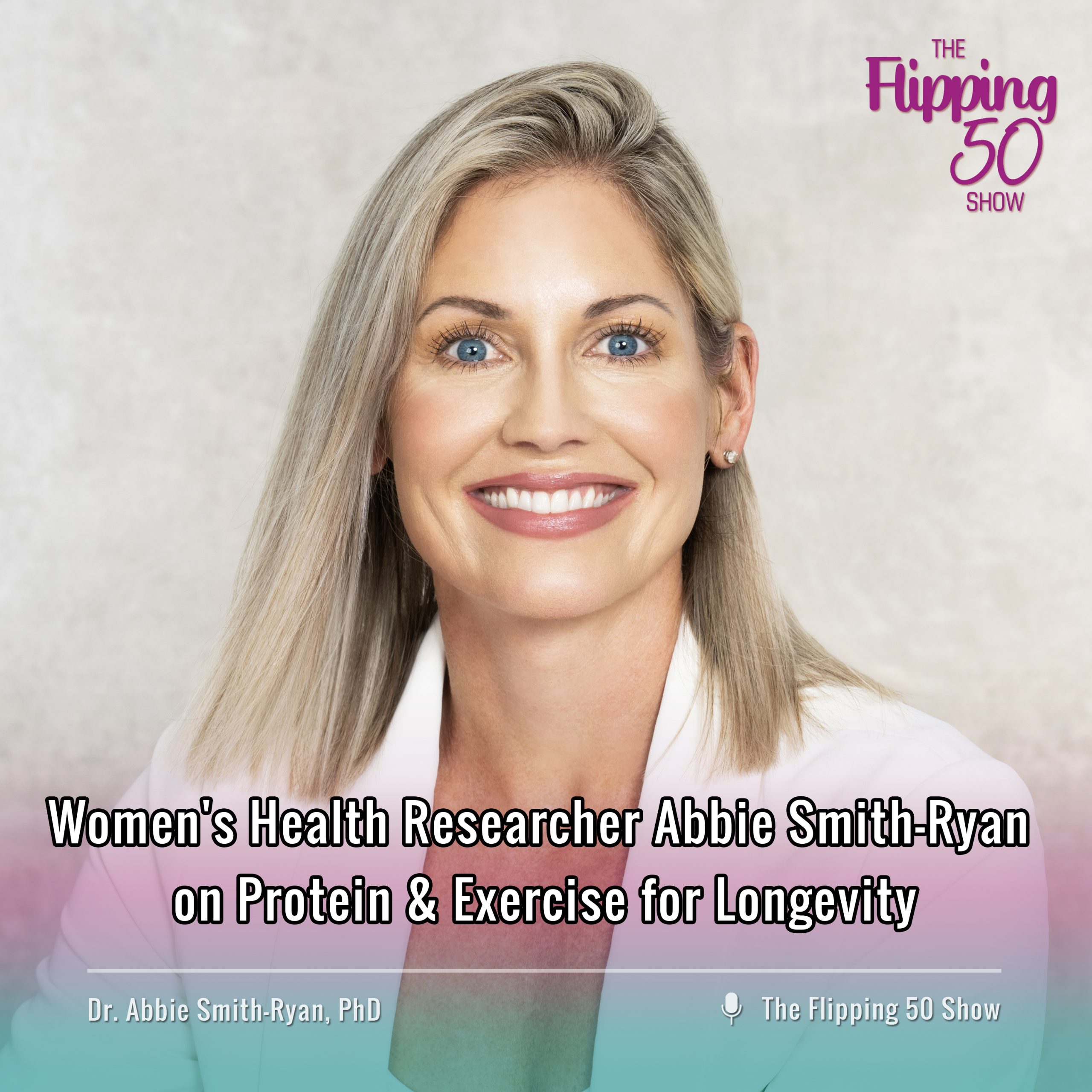
The growing body of knowledge around midlife women’s fitness and longevity is in part due to women’s health researcher Abbie Smith-Ryan.
I’m thrilled to host her and share a few of the insights from her work. She’s instrumental in bringing directly to you from the lab the practical ways you can change your next workout and your routine this week for a better future.
Listen to this episode for the data-based facts with women’s health research, Abbie Smith-Ryan!
My Guest:
Dr. Abbie E. Smith-Ryan, PhD, is a Professor of Exercise and Sport Science who leads an innovative research lab focused on body composition, metabolism, sport nutrition, and exercise performance—particularly for women across the lifespan. She has published over 220 peer-reviewed studies and is a nationally recognized leader in sports science, with multiple awards from the National Strength and Conditioning Association.
Midlife Women Should Know The Facts From Women’s Health Researcher Abbie Smith-Ryan
Questions We Answer in This Episode:
- [00:04:28] – How has entering midlife changed how Abbie views her own research?
- [00:06:34] – Why do postmenopausal women often need more training volume to change body composition — and how do we balance that with recovery?
- [00:14:54] – Is high-intensity training actually helpful for midlife women — and how do we know when intensity is helping versus hurting?
- [00:14:46] – Does walking really burn more fat — or is that one of the biggest myths in exercise science?
- [00:21:02] – What is metabolic inflexibility, and why do so many midlife women struggle to burn fat even when they’re exercising and eating “right”?
- [00:23:52] – Why does protein before exercise improve fat oxidation, energy, and muscle preservation — especially after 40?
- [00:32:43] – What’s the one piece of science every midlife woman should understand to immediately improve how she trains and fuels?
Women Can Build Muscle After Menopause
- Volume = combination of load, sets, and reps.
- Aging muscle fibers behave more like endurance fibers and need stronger stimulus.
Volume vs Recovery: Finding the Balance
- Life stress, caregiving, and hormonal shifts increase recovery needs.
- Fueling (especially protein) plays a major role in accelerating recovery.
- Less volume + higher intensity can be more effective and joint-friendly.
- Interval-style training can provide results without excessive wear and tear.
High-Intensity Training: Helpful or Harmful?
- HIIT is not inherently harmful — frequency matters.
- Optimal benefits seen with 2–3 sessions per week.
- Excessive HIIT (5+ days/week) may impair recovery hormones.
- Improves cardiovascular health and glucose regulation.
- More is not better — targeted stress creates adaptation.
The Future of Women’s Fitness Research Through the Lens of Women’s Health Researcher Abbie Smith-Ryan
What Is Metabolic Flexibility?
- Ability to switch between fat and carbohydrate for fuel.
- Perimenopause often leads to metabolic inflexibility.
- Protein at meals (and before exercise) improves fuel usage over time.
Protein Before Exercise: What the Research Shows
- Protein before training increases energy expenditure and fat oxidation.
- Leads to greater training volume and muscle preservation.
- Improves soreness, recovery, and lean mass over time.
Whole Foods vs Supplements
- Whole foods are ideal but not always practical before workouts.
- Gut tolerance changes with age.
How Much Protein Do Women Really Need?
- 1 gram per pound of body weight is a practical starting point.
- Needs vary based on goals, training load, and body composition.
- To get leaner, protein often needs to increase — not decrease.
Under-Eating, Micronutrients & Fiber
- Many active women are under-fueled, not over-eating.
- Relative energy deficiency can mimic perimenopause symptoms.
- Protein alone isn’t enough — micronutrients matter.
- Fiber plays a critical role in metabolic and hormonal health.
- Magnesium absorption is impacted by estrogen changes.
Connect with Dr. Abbie:
- Website – Dr. Abbie Smith-Ryan
- Instagram – @asmithryan
- LinkedIn – Dr. Abbie Smith-Ryan
Other Episodes You Might Like:
- Previous Episode – EveryDay Home Health: How I Wellness-Proofed My New House
- Next Episode – Questions to Ask Your Menopause Fitness Coach (& Questions a Coach Should Ask You)
- More Like This:
Resources:
- The Flipping 50 VIP Membership is now open! Join the first and original exclusively made-for-women in menopause and beyond fitness community.
- Don’t know where to start? Book your Discovery Call with Debra. Leave this session with insight into exactly what to do right now to make small changes, smart decisions about your exercise time and energy.
- Understand how sleep relates to your hormones, muscle mass and weight loss with Flipping 50 Sleep Yourself Strong.