This episode is sponsored by Flipping 50 Menopause Fitness Specialist.
Become a health & fitness coach who finally speaks midlife women’s language.
Learn how to design workouts that balance hormones that actually get results for women in menopause.
You don’t need the perfect rep range for muscle, strength and bone after 50. You need the right effort, the right frequency, and a plan your joints and schedule can repeat.
We’re clearing up one of the most persistent myths in menopause fitness: The Rep Range Rulebook for muscle, strength and bone after 50.
For decades the “repetition continuum” told us:
- Heavy = strength
- Moderate = hypertrophy
- Light = endurance
The problem? The research says it’s not that simple—or better said, it’s not that limiting, especially when you train close to failure and especially when your recovery and joints matter (hello, menopause).
I’m going to walk you through what the studies actually DID—step-by-step—and then we’ll translate it into women’s rep-range for muscle, strength, and bone density after 50.
How Rep-Range for Muscle, Strength, and Bone After 50 Really Works in Midlife
Muscle Growth – Hypertrophy Isn’t Married to One Rep Range
Across a wide range of loads—roughly 5 to 30 reps—whole muscle hypertrophy is often similar when sets are taken close to failure. (Sports (Basel). 2021, PMID: 33671664)
That doesn’t mean every rep range is equally convenient, equally joint-friendly, or equally motivating. It does mean hypertrophy is more flexible than we were taught.
Study protocol you can picture: the “one leg does this, the other leg does that” design.
One of the most famous early papers here is in young men:
(Journal of Applied Physiology. 1985, PMID: 22518835)
Who: Young men
Duration: 10 weeks
Frequency: 3x/week
Design: Within-subject (different training on each leg)
Conditions:
- 30% 1RM, 3 sets (light load, high reps)
- 80% 1RM, 1 set (heavy load, low volume)
- 80% 1RM, 3 sets (heavy load, higher volume)
Outcome:
Muscle growth occurred across conditions, and load alone didn’t dictate hypertrophy.
Translation for Menopause Fitness:
If you can’t lift super heavy right now—joints, confidence, equipment, fatigue—you can still build muscle with moderate to lighter loads when you train with real effort.
But here’s the nuance:
- Moderate reps (like ~8–12) are usually more time-efficient
- Extremely high reps can fail because people quit from discomfort/boredom before true effort (or arthritis … wear and tear on joints is not ideal)
There’s also evidence there may be a lower threshold where hypertrophy can diminish when loads are very low—around ~20% 1RM—but the “why” may be that people stop too far from failure. (European Journal of Sports Science. 2018, PMID: 29564973)
Smarter Training Starts With Rep-Range for Muscle, Strength, and Bone After 50
Strength Is More Specific Than Muscle
Strength tends to favor heavier loads
…especially when the strength test matches the training.
When the test is “neutral,” the strength gap narrows.
And you see this again in trained lifters:
(Journal of Applied Physiology. 1985, PMID: 40827709)
Who: trained individuals
Duration: 9 weeks
Frequency: 2x/week
Design: within-subject (each leg different)
Conditions:
- High-load: 3–5 reps
- Low-load: 20–25 reps
- Key detail: sets taken to failure
Results:
- Hypertrophy similar
- Strength gains diverged (heavier loads usually win for strength outcomes)
Translation for Menopause Fitness:
- If your goal is strength—especially “I want my lower body to be stronger”—you need at least some heavier work.(longevity, bone-related benefit may be greater after first year)
- If your goal is muscle—you have more flexibility, especially if joints are cranky. (metabolism)
Older Adults—There Isn’t One “Magic” Intensity
Now let’s talk about women over 50, because we’re not programming for 22-year-old gym bros.
A key older adult study looked at different intensity ranges when other variables were equated:
(Journal of Strength and Conditioning Research. 2004, PMID: 15574091)
Who: Previously untrained older adults
Duration: 18 weeks
Key comparison: Training intensities ranging from 6RM to 15RM
Findings:
Strength gains were similar across 6–15RM when program variables were equated—especially over the full training period.
Translation for Menopause Fitness:
In early phases for novice or returning lifters, a wide range of loads works—which is great news when recovery and joints are a factor.
This supports a menopause-smart approach:
- You can start where you will train consistently injury-free
- You can progress without forcing maximal loading early
Rep-Range for Muscle, Strength, and Bone After 50 for Stronger, Healthier Aging
Bone Density Has Its Own Rules
Bone isn’t trained exactly the same way as muscle.
A network meta-analysis in postmenopausal women found something clinically useful:
(The Journal of Injury, Function and Rehabilitation. 2024, PMID: 39032163)
Best option: Moderate intensity resistance training, 3 days/week for improving lumbar spine and femoral neck BMD (we’ll reference it in written materials, and keep the protocol consistent in programming).
Even without giving you a million numbers, here’s the translation:
- Bone likes moderate loading done consistently
- Bone doesn’t need you wrecked
- Bone needs enough strain and enough frequency (if you can’t lift heavy, increasing frequency – if your energy allows, to 3 days a week may be a good alternative)
Menopause-Friendly Bone Rule:
3x/week, moderate intensity, repeatable sessions beat occasional heroic workouts.
And here’s the other menopause-specific truth:
If you can’t recover from high volume, your bones won’t get the consistent signal they need.
So we build the plan around:
- Spine + hip loading
- Low-to-moderate volume
- Consistency with recovery a high priority
Your Menopause Rep-Range Reality Check
For muscle (hypertrophy):
- Many rep ranges work if effort is there
(Sports (Basel). 2021, PMID: 33671664., Journal of Applied Physiology. 1985, PMID: 22518835.) - 8–12 is efficient
- Include some heavier and some lighter work if tolerated
(Sports (Basel). 2021, PMID: 33671664.)
For absolute strength:
- Include heavier loads sometimes
- Keep it specific to your goal (lower body strength: squats)
(Journal of Applied Physiology. 1985, PMID: 40827709.)
For bone:
- Moderate intensity + 3 days/week is a powerful target in postmenopause (10-15)
- Keep sessions repeatable and not exhausting
- If you CAN and want to go heavy, Beck, et al proved in the LIFTMOR study it is safe and does work. That doesn’t disprove that other loads don’t.
Understanding Rep-Range for Muscle, Strength, and Bone After 50 Through Research
Here’s the approach:
Use RIR (Reps in Reserve)
- Beginner/restarting: finish sets with 5–6 RIR (and generally higher rep/lower load)
- Intermediate: 3–4 RIR
- Advanced: about 2 RIR (at a range of loads you tolerate well)
You choose your load based on today’s body, sleep, stress, hormones—not your ego, or a blind follow of a single protocol when many work.
And we keep workouts:
- Realistic in time
- 2–3 sets per lift to start
- Spine + hip priority
- Carries or loaded balance during rests (bone + fall prevention)
- Post-menopausal you may find a bit more volume is necessary for body composition change.
If this episode relieved you—good. That’s the point.
You don’t need to commit to a rep-range religion.
You need a plan that respects:
- Effort
- Specificity
- Recovery
- Consistency
If you want help building your “menopause muscle + bone” week, start a program that won’t hurt or exhaust you, be consistent with sessions. The power isn’t in one perfect workout. It’s in repeating what works. If you feel great with twice weekly sessions and you’re getting results, you may leave it. Especially if you’re otherwise active.
If you feel good and want to test a third workout a week, add a flowing yoga series that causes you to do body weight work with more rotation and lateral emphasis between your two strength workouts.
You can always do more. If energy or time is an issue, start with two and make it easy to do the right thing.
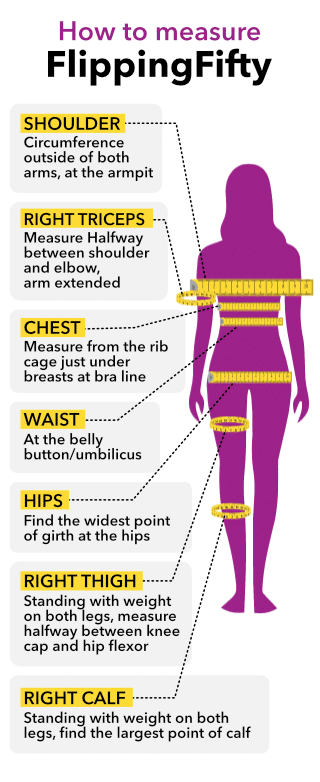
Measure what works with at-home tests you can do in minutes and see the charts comparing yourself to others your age through the Flipping 50 Fitness Scorecard
Finally, Rep-Range for Muscle, Strength, and Bone After 50 That Makes Sense
If this episode made you flip your workout routine — share it!
👉 Post to your stories, tag @Flipping50TV in Instagram and share the episode to your best friend.
👉 Meet other women, who are done with outdated fitness advice, at Flipping50 Facebook Group.
👉 Subscribe, share, and leave a review if you’re ready to flip the script on Flipping 50 The Stronger Way.
Connect with Flipping 50:
- Flipping50 Insiders Facebook Group
- Instagram – @Flipping50TV
- YouTube – @Flipping50TV
- More Episodes – Flipping 50 The Stronger Way
References:
- Sports (Basel). 2021, PMID: 33671664.
- Journal of Applied Physiology. 1985, PMID: 22518835.
- Journal of Applied Physiology. 1985, PMID: 40827709.
- Journal of Strength and Conditioning Research. 2004, PMID: 15574091.
- European Journal of Sports Science. 2018, PMID: 29564973.
- The Journal of Injury, Function and Rehabilitation. 2024, PMID: 39032163.
Other Episodes You Might Like:
- Previous Episode – Fix Your Blood Sugar and Reverse Type 2 Diabetes and Prediabetes
- Next Episode – Are Your Hormones Out of Balance?
- More Like This:
Resources:
- Track your muscle and body composition with the InBody Smart Scale. Use FLIPPING50 code to get 15% off!
- Measure at home with the Flipping 50 Fitness Scorecard! We don’t need to do VO2 max tests to know how hard to work and if we’re improving there are easy tests to give you an idea where you are right now… and give you a suggestion for training to improve.
- My favorite Blood Glucose Monitor here! Analyze in real-time how your body responds to food, exercise, stress, and sleep. When you improve your muscle quality and quantity blood glucose levels naturally benefit