This episode is sponsored by Flipping 50 Menopause Fitness Specialist.
- Flipping 50 Menopause Fitness Specialist.- Become a health & fitness coach who finally speaks midlife women’s language. Learn how to design workouts that balance hormones that actually get results for women in menopause.
The noise in women’s fitness has never been louder—and if you’re wondering who to trust, you’re not alone.
Every scroll seems to deliver a new expert, a new rule, or a new warning that contradicts the last one, leaving many women feeling more confused than confident.
Let’s cut through the hype to help you understand why these conflicting messages exist and how to evaluate them without getting pulled into the latest trend. You’ll learn a practical way to separate evidence from opinion so you can make informed decisions that actually support your health, strength, and longevity.
Instead of adding to the noise in women’s fitness, this conversation gives you the clarity and confidence to focus on what truly matters.
The Real Problem Isn’t Lack of Information—It’s Too Much Conflicting Information
- Many women are hearing completely opposite advice on:
- Heavy lifting vs. lighter weights
- HIIT vs. hormone-friendly exercise
- Seed oils
- Cycle syncing
- Protein recommendations
- Conflicting expert opinions often leave women overwhelmed rather than empowered.
- Social media algorithms reward controversy, making disagreements appear much larger than they really are.
- Most respected experts actually agree on far more than they disagree.
- The biggest challenge is learning how to filter information instead of blindly following personalities.
How to Cut Through the Noise in Women’s Fitness With Confidence and Clarity
SEGMENT 1: Meet the Players
Understanding the Two Major Voices in Women’s Fitness
- The Academic Myth-Callers
- Researchers and registered dietitians who are increasingly active on social media and podcasts
- Prioritize published evidence.
- Ask for high-quality clinical data before making recommendations.
- Challenge unsupported or exaggerated health claims.
- Focus on what has been scientifically demonstrated.
- Examples discussed include researchers studying:
- Muscle protein synthesis
- Women’s physiology
- Exercise science
- Nutrition research
- Who they are:
- Dr. Stuart Phillips — McMaster University, Tier 1 Canada Research Chair in Skeletal Muscle Health, 200+ original research papers, top 1% of cited researchers in nutrition and exercise science. Co-host of the Exercise Science podcast with Dr. Martin Gibala.
- Dr. Martin Gibala — McMaster University, Faculty of Science Research Chair in Integrative Exercise Physiology, best known for his HIIT research and co-authoring The One-Minute Workout. Phillips and Gibala’s shared platform explicitly describes their mission as “separating hype from hard facts.”
- Dr. Lauren Colenso-Semple — PhD in muscle physiology (women’s exercise and MPS), co-owner of MASS Research Review, former personal trainer. Her own dissertation research measured muscle protein synthesis across menstrual cycle phases using stable isotope tracers and muscle biopsies — some of the most rigorous female-specific work available.
- Dr. Abbie Smith-Ryan — Professor at UNC, exercise physiology and female body composition researcher. Frequently the “what does the data actually show” voice in research translation.
- Dr. Jessica Knurick — PhD in nutrition science, registered dietitian, 2M+ Instagram followers, known for calling out MAHA-adjacent health misinformation and seed oil fear-mongering.
Finding Truth Beyond the Noise in Women’s Fitness and Social Media Trends
- The Practitioner-Experience Voices
- Researchers-turned-entrepreneurs, physicians, and clinicians with real credentials.
- Uses scientific evidence plus years of real-world coaching experience.
- Develops practical frameworks for women when research hasn’t yet caught up.
- Often creates books, programs, supplements or coaching systems around these ideas.
- While many of their ideas solve real problems, some recommendations move ahead of current scientific evidence.
- Who they are:
- Dr. Stacy Sims — Exercise physiologist, positions at Stanford and Auckland University of Technology, legitimate researcher. Author of ROAR. Her foundational point — that most exercise science was conducted on male subjects and the findings were applied to women without adjustment — is valid and important. Where she draws criticism: the specificity of cycle-syncing training protocols goes beyond what the current RCT base establishes.
- Dr. Gabrielle Lyon — Osteopathic physician, fellowship-trained in nutritional science and geriatrics, founder of Muscle-Centric Medicine. Her core thesis — that skeletal muscle is the primary organ of metabolic health and longevity — is broadly supported. She has faced criticism for factual errors, a strong bias toward animal protein, and for sometimes presenting her protocols with more certainty than the evidence base warrants.
- Alisa Vitti — Creator of the FLO protocol, cycle-syncing originator. The directional claim (hormones affect how some women feel at different cycle phases) has biological plausibility. The specific four-phase training prescriptions are far out ahead of the research.
- Dr. Mark Hyman — Functional medicine, functional food, strongly anti-seed-oil. His claims on seed oils are probably the most directly contradicted by the evidence of any claim in this space.
Noise in Women’s Fitness Explained With Science Every Midlife Woman Should Understand
SEGMENT 2: The Irony Problem
Example 1: The Protein Seller Who Warns Against Protein Sellers
- A respected protein researcher cautions you shouldn’t take protein advice from anyone who is selling protein, because they have a commercial interest..
- This illustrates how commercial relationships can exist in multiple directions, even among highly respected professionals.
- The takeaway isn’t to distrust individuals, but to recognize that conflicts of interest are often more complex than they first appear.
Example 2: My Own Story
- I have to include myself in this. For over 30 years, I said I would never sell supplements. I’d watched the industry — I knew what was in those products.
- Women started asking me every single day: what do you recommend?
- I created something clean. Five ingredients. Necessity is the mother of invention.
Example 3: The Podcast Echo Chamber
- Podcasts and online platforms often feature guests who already share similar viewpoints, creating conversations with little challenge or debate.
- When opposing perspectives aren’t part of the discussion, audiences hear affirmation rather than critical evaluation of the evidence.
- Scientific progress benefits from respectful disagreement, thoughtful questioning, and examining multiple viewpoints.
SEGMENT 3: The Wasted Energy
- The biggest problem isn’t disagreement — the biggest problem is what disagreement does to women trying to improve their health.
- What Happens:
- Women hear contradiction instead of nuance.
- They become overwhelmed.
- They stop trusting themselves.
- They jump from one approach to another.
- Many stop exercising altogether.
- The Real Cost:
- Inconsistency.
- Frustration.
- Analysis paralysis.
- The Most Important Lesson:
- A confused mind does nothing.
- Consistency almost always matters more than finding the “perfect” answer.
Why The Noise in Women’s Fitness Leaves Smart Women Feeling More Confused
SEGMENT 4: The Real Answer on “Heavy” — What the Science Actually Shows
The Question Women Are Really Asking
- When women ask: “Do I need to lift heavy?”
- What they are often asking is:
- Can I build muscle safely?
- Do I have to use intimidating weights?
- Will lighter weights still work?
What the Research Shows
- Current evidence suggests:
- Muscle growth can occur with heavy or lighter weights.
- The key factor is reaching sufficient effort.
- Training near muscular fatigue matters more than the exact load.
- The Science:
- High-load and low-load training can produce similar muscle growth when effort is matched.
- Simply moving weights without challenge is unlikely to create adaptation.
Where Gabrielle Lyon Actually Lands
- Public conversations often oversimplify expert opinions.
- Many experts agree more than audiences realize.
- The disagreement is often about emphasis rather than complete opposition.
For women over 40: The best program is one you can do consistently.
- Choose weights appropriate for your experience.
- Focus on good form.
- Challenge muscles safely.
- Progress gradually.
- Prioritize consistency.
SEGMENT 5: Your Filter — Questions to Ask Before You Follow Advice
- Question 1: What are they selling — and does their advice align with what they sell?
- Are they transparent?
- Does their message stay consistent?
- Would they give the same advice without the product?
- Question 2: Are they speaking in absolutes about things the research describes as conditional?
- Be cautious of:
- Always
- Never
- Everyone
- No one
- Science often depends on:
- Context
- Individual differences
- Training history
- Hormones
- Goals
- Be cautious of:
- Question 3: Who’s missing from this conversation?
- Is another perspective absent?
- Has opposing evidence been discussed?
- Are multiple viewpoints represented?
- Question 4: Is this person making the science more accessible — or more complicated?
- The best educators:
- Explain clearly.
- Acknowledge uncertainty.
- Distinguish facts from opinions.
- Help women take action.
- The best educators:
Noise in Women’s Fitness Is Growing Here’s How to Make Better Decisions
SEGMENT 6: The Coach in the Room Who Is Also Lost
The Confirmation Bias Nobody Is Immune To
- Researchers have biases.
- Coaches have biases.
- Consumers have biases.
- Social media reinforces existing beliefs.
But the Coach’s Observational Data Is Not Nothing
- Coaches often notice:
- Patterns.
- Responses.
- Challenges.
- Successes.
- Long before formal studies are available.
- Practical experience still matters.
What Coaches Actually Need
- Better education.
- Better interpretation of research.
- Better communication skills.
- More curiosity and less certainty.
The Education Gap Is the Real Culprit
- The problem isn’t that women have too little information.
- The problem is:
- Too much information.
- Too little context.
- Too few tools for evaluating what they hear.
The goal isn’t to choose a side in the noise in women’s fitness.
The goal is to ask better questions, think critically, and make informed decisions that support your own health, strength, and longevity.
Know The Real Cost of Following Every Voice in the Noise in Women’s Fitness
If this episode made you flip your workout routine — share it!
👉 Post to your stories, tag @Flipping50TV in Instagram and share the episode to your best friend.
👉 Meet other women, who are done with outdated fitness advice, at Flipping50 Facebook Group.
👉 Subscribe, share, and leave a review if you’re ready to flip the script on Flipping 50 The Stronger Way.
Connect with Flipping 50:
- Flipping50 Insiders Facebook Group
- Instagram – @Flipping50TV
- YouTube – @Flipping50TV
- More Episodes – Flipping 50 The Stronger Way
Voices Discussed in this Episode:
- Dr. Stuart Phillips & Dr. Martin Gibala — Exercise Science podcast (McMaster University)
- Dr. Lauren Colenso-Semple — drlaurencs.com | @drlaurencs | MASS Research Review
- Dr. Abbie Smith-Ryan — UNC Chapel Hill, Exercise and Sport Science
- Dr. Jessica Knurick — @drjessicaknurick | jessicaknurick.com
- Dr. Stacy Sims — drstacysims.com | ROAR (book)
- Dr. Gabrielle Lyon — drgabriellelyon.com | Forever Strong (book)
- Alisa Vitti — floliving.com | WomanCode (book)
- Dr. Mark Hyman — drhyman.com
References:
- Journal of Applied Physiology. 2016, PMID: 27174923.
- Journal of Applied Physiology. 2025, PMID: 40013418.
- Journal of Human Kinetics. 2020, PMID: 33312275.
- Frontiers in Physiology. 2017, PMID: 28611677.
- Lipids in Health and Disease. 2024, PMID: 39267068.
- Journal of the Academy of Nutrition and Dietetics. 2012, PMID: 22889633.
Episodes Mentioned:
- Dr. Stuart Phillips on Optimal Protein Podcast with Vanessa Spina (2025)
- Dr. Lauren Colenso-Semple on Movement Logic Podcast with Dr. Sarah Court (2025)
- Dr. Martin Gibala on The Dr. Gabrielle Lyon Show (2023)
Other Episodes You Might Like:
- Previous Episode – Why Doing More Exercise Can Backfire After 50
- More Like This:
Resources:
- Not sure you’re doing what is best for you right now? Get a 90-Minute Ultimate Consultation with Debra. Together, you formulate the actual plan that will work for you!
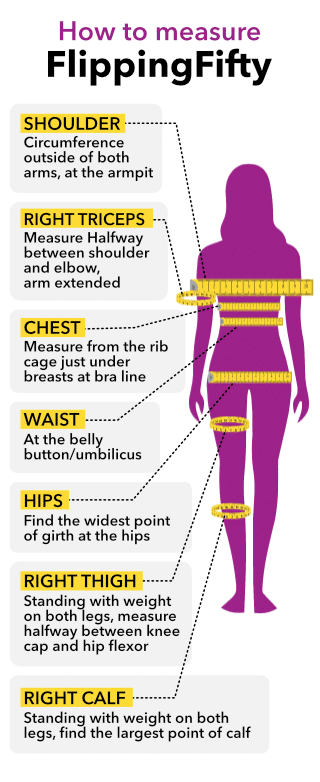
- Use Flipping 50 Scorecard & Guide to measure what matters with an easy at-home self-assessment test you can do in minutes.