This episode is sponsored by AquaTru.
- AquaTru – Go to https://AquaTru.com/ now for 20% off (your purifier) using promo code FLIPPING50. AquaTru even comes with a 30-day best-tasting water guarantee.
The menopause motivation and mood boost you need might not come from trying harder—it may come from understanding your brain, body, and biology better.
If you’ve noticed more anxiety, lower motivation, brain fog, or a lack of enthusiasm for things you used to enjoy, you’re not alone.
In this episode, we uncover the hidden links between inflammation, brain chemistry, movement, and mood—and why so many women are overlooking it. Movement, healthy fats, community, sunlight, and even music influence the body’s natural feel-good compounds that help you stay resilient through midlife and beyond.
If you’re ready to feel more energized, optimistic, and in control of your health, this episode delivers powerful strategies to support your menopause motivation and mood boost.
My Guest:
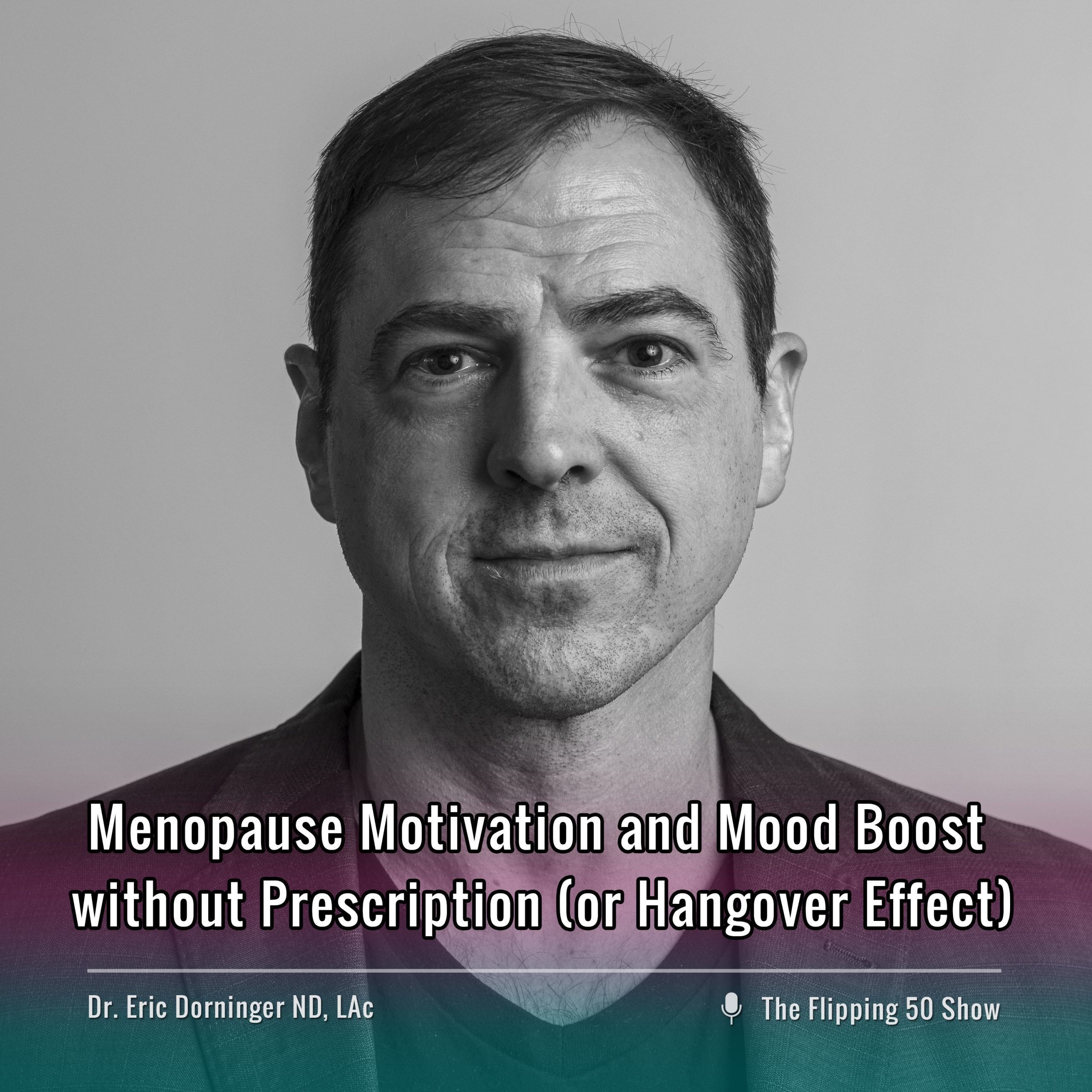
Dr. Eric Dorninger ND, LAc is a naturopathic doctor, licensed acupuncturist, and founder of Roots and Branches Integrative Health Care in Boulder, Colorado. With a background in kinesiology, emergency medicine, naturopathic medicine, and acupuncture, he takes an integrative approach to uncovering the root causes of chronic illness. Since founding his clinic in 2005, he has specialized in helping patients with complex “mystery illnesses” by focusing on accurate diagnosis and removing obstacles to healing. He is also a certified Shoemaker practitioner with expertise in mold and biotoxin-related illness. In addition to private practice, Dr. Dorninger teaches functional medicine, practices Jiu-Jitsu, skis, and advocates for evidence-based natural medicine.
The Surprising Science Behind Menopause Motivation and Mood Boost After 50
Questions We Answer in This Episode:
- [00:02:14] How are inflammation, anxiety, depression, and other mood disorders connected?
- [00:03:31] What are endogenous cannabinoids, and what role do they play in mood, pain, and inflammation?
- [00:07:40] How do exercise and resistance training naturally boost the body’s own feel-good chemicals?
- [00:09:12] Why do we tend to avoid the types of exercise we need most, and how can we create better balance in our training?
- [00:16:10] Can music, social connection, and community improve mood and reduce inflammation?
- [00:19:35] How does CBD interact with serotonin, dopamine, and GABA to support mood, motivation, and stress resilience?
- [00:41:45] What should women know before trying CBD, including product quality, dosage, safety, and realistic expectations?
Sleep, Mood, and Why Feeling Good Starts Before Your Workout
- Poor sleep affects motivation, coordination, exercise performance, and emotional resilience.
- Many women associate CBD only with sleep support, but its effects extend beyond helping you rest.
- Mood, anxiety levels, motivation, and mental clarity can all be influenced by underlying inflammation and nervous system balance.
- Better sleep creates a foundation for better movement, better choices, and better emotional health.
The Inflammation-Mood Connection Most People Miss
- Anxiety, depression, OCD, ADHD, intrusive thoughts, and other mood disorders consistently correlate with elevated inflammatory markers.
- Inflammation is often not the root problem—it has an “origin story” that needs to be identified.
- Chronic health challenges require looking beyond symptom suppression and investigating underlying causes.
- Reducing inflammation can improve both physical symptoms and emotional well-being.
Natural Strategies for Menopause Motivation and Mood Boost Without Medications
Your Body Makes Its Own Cannabinoids
- Humans naturally produce endogenous cannabinoids (“self-made cannabinoids”).
- These compounds help regulate communication between the brain, immune system, and endocrine system.
- Endogenous cannabinoids act like the body’s internal “firefighters” and peacekeepers.
- Chronic inflammation can deplete these naturally produced compounds, potentially affecting mood, pain, and stress resilience.
Midlife Women May Need More Support
- Hormonal changes after menopause reduce some of the body’s natural anti-inflammatory protection.
- Additional stressors such as gut dysfunction, chronic infections, mold exposure, injuries, sleep disorders, or repeated antibiotic use can increase inflammatory burden.
- When inflammation rises, the body’s cannabinoid reserves may become depleted.
- This depletion may contribute to anxiety, depression, headaches, joint pain, and digestive symptoms.
Healthy Fats Help Build Better Brain Chemistry
- Healthy fats serve as building blocks for endogenous cannabinoids.
- Sources such as olive oil and fish oil support the body’s natural production of these compounds.
- One important endogenous cannabinoid, anandamide, is known as the “bliss molecule.”
- Consistent nutrition supports both inflammation control and emotional health.
Exercise Creates Natural Mood-Boosting Chemicals
- Research discussed in the episode showed a significant increase in endogenous cannabinoids after exercise.
- Resistance training provides benefits that extend far beyond muscle and bone health.
- The “runner’s high” and post-workout sense of well-being are partly driven by these naturally produced compounds.
- Exercise functions as a powerful, natural mood regulator.
The Exercise You Need May Not Be the One You Love
- Many people naturally gravitate toward activities that match their body type and strengths.
- Those who prefer endurance work often benefit from adding strength training.
- Those who enjoy strength-focused exercise often benefit from adding more cardiovascular training.
- Long-term health requires balancing strengths with areas of weakness.
- Growth often happens through activities that initially feel uncomfortable.
Menopause Motivation and Mood Boost Through Exercise CBD and Brain Health
Movement Gives You More Than Weight Loss
- Exercise frequently delivers benefits people never expected.
- Improved confidence, energy, resilience, and quality of life often become more valuable than physical changes.
- Consistency creates emotional rewards alongside physical results.
- Many people begin exercising for appearance goals but continue because of how much better they feel.
CBD, Serotonin, Dopamine, and Motivation
- Research on CBD isolate shows effects on multiple neurotransmitter systems.
- CBD may enhance serotonin receptor activity, supporting mood and emotional resilience.
- Higher serotonin levels may increase enthusiasm and willingness to take positive action.
- Motivation often starts with improved brain chemistry rather than stronger willpower.
Dopamine: The Missing Piece in Anxiety Conversations
- Dopamine influences ambition, drive, confidence, decisiveness, hope, and task completion.
- Low dopamine can contribute to feelings of overwhelm and anxiety.
- Exercise naturally increases dopamine production.
- Nutrient deficiencies, poor sleep, unstable blood sugar, and low iron can negatively affect dopamine levels.
- Addressing dopamine health may improve motivation and emotional resilience.
ADHD, Anxiety, and the Need for Calm Focus
- Anxiety and ADHD share overlapping neurological pathways.
- GABA helps create calm, focused attention.
- Balanced dopamine and GABA levels support both concentration and emotional stability.
- Chronic overstimulation can worsen attention and stress regulation.
Practical CBD Use and Safety Considerations
- Research discussed included benefits for anxiety management and emotional regulation.
- CBD is not a substitute for healthy lifestyle habits.
- Foundational factors such as nutrition, movement, sleep, sunlight, and community should be addressed first.
- Individual responses vary, and dosage may need personalization.
- Pregnancy and breastfeeding require additional caution due to limited research.
Connect with David:
- Website – Blue Sky CBD
- Instagram – @blueskycbd
Other Episodes You Might Like:
- Previous Episode – Intersection of Blue Zones and Modern Muscle Science for Longevity
- Next Episode – 3 Workout Studies Every Woman Over 50 Needs to Know
- More Like This:
Resources:
- Don’t know where to start? Book your Discovery Call with Debra. Leave this session with insight into exactly what to do right now to make small changes, smart decisions about your exercise time and energy.
- Use Flipping 50 Scorecard & Guide to measure what matters with an easy at-home self-assessment test you can do in minutes.
- Get BlueSky CBD to boost your mood and motivation. Use code FLIPPING to get 20% off!