This episode is sponsored by Cozy Earth and Calocurb.
- Cozy Earth – Discover how care in every detail transforms simple routines into moments of true comfort and ease. Head to cozyearth.com and use my code Flipping50 for up to 20% off.
- Calocurb – Feel full faster with Calocurb! Clinically proven, natural hunger control – prescription free, affordable, and fast acting.Get 10% off when you use this link https://www.flippingfifty.com/calocurb
What does the latest exercise guidelines update really mean for you?
Good news… it just got simpler!
The new guidelines show what midlife women need most—less complexity, more consistency, and real results for metabolic health.
And the biggest shift?
Resistance training is no longer optional—but it doesn’t have to be complicated to work.
In this episode, you’ll learn exactly what the exercise guidelines update means for your workouts.
Why This Exercise Guidelines Update Matters
- ACSM (American College of Sports Medicine) guidelines are considered the “Bible” for exercise professionals
- Major simplification aimed at getting more people active
- Resistance training is now essential, not optional
- Exercise doesn’t have to be gym-based—daily activities count
With the exercise guidelines update, ACSM did something we should all welcome.
They made it easier.
To give you a bit more context in its importance, ACSM partnered with the American Medical Association (AMA)
First let me acknowledge a few names you too may recognize:
CURRIER BS, D’SOUZA AC, SINGH MAF, LOWISZ CV, RAWSON ES, SCHOENFELD BJ, SMITH-RYAN AE, STEEN JP, THOMAS GA, TRIPLETT NT, WASHINGTON TA, WERNER TJ, PHILLIPS SM. The bolded were among the authors and committee members involved in this update. A sign for me and for you, we’re in good hands, and on this podcast, we’re in good company.
Exercise Guidelines Update Changes Everything About Your Midlife Workout Strategy
As we go into the update and findings, know that the position statement is based on scientific evidence – a lot of it, that includes, but doesn’t isolate women in menopause, I’ll offer insight along the way and after about any nuance related to women over 40 impacted by estrogen and other hormonal reduction associated with menopause. This also doesn’t precede the ACSM position statement about exercise for older adults- generally intended for adults over 65 when changes due to age are more cumulative and recommendations get more specific, for two reasons:
- Many people over 65 still need to start exercise
- Many of those now have cumulative losses in muscle and bone
My hope is that the position statement for older adults will change in time – and it may take a couple decades – if you and I do our part and play out older adulthood differently and more actively than others have, then that elevated fitness and ability will reflect something very different for older adults that have been and continue to be active and seek strength and power.
The Science Behind the Update
- Based on 137 systematic reviews and 30,000+ participants
- Focus: what actually improves strength, muscle, and function
- Pandemic highlighted importance of muscle mass for health outcomes
The Big Finding: Resistance Training Works (No matter how it is done)
Compared with doing no resistance training, it improves::
- muscle strength
- muscle size
- power
- muscular endurance
- contraction speed
- gait speed
- balance
- chair stand performance
- timed up-and-go performance
- broader physical function
P.S. I could go on to share the metabolic, endocrine and neural improvements too, but I’m going to stick with the ACSM position statement for this episode related to the physical fitness outcomes
Why This Exercise Guidelines Update Simplifies Strength Training in Midlife
But the bigger update is this:
Far fewer programming details seem essential than older guidelines suggested.
A lot of variables people worry about did not consistently change results.
What Changed in the New Guidelines
Older ACSM-style thinking emphasized: (new in parenthesis)
- 2–3 sessions per week (2 or more)
- 8–10 exercises per session (10 or more sets)
- 1–4 sets per exercise (2-3 sets per exercise)
- 8–20 reps per set (all rep ranges work 6-30 is generally range)
- 2–3 minutes rest (dropped- feeling ready is individual)
- specific load zones (still goal-dependant but all offer value)
- structured progression (adding 5% or 10% replaced by feels like )
- variation and periodization as key programming features (work but aren’t mandatory)
- fairly detailed rules about how training should look (loosened guidelines)
Newer evidence says:
Resistance training still matters, but many different approaches work.
What Actually Matters Now
- For Strength:
- heavier loads help most for strength: ≥80% 1RM
- full range of motion is better than partial
- 2–3 sets is better than fewer
- at least 2 sessions per week
- exercises placed earlier in the workout improve strength most
- For Muscle Growth (hypertrophy):
- higher weekly volume matters most: ≥10 sets per muscle group per week
- eccentric overload can help
- For Power (most important for aging):
- moderate loads worked best: 30–70% 1RM
- lower-to-moderate total volume
- fast concentric intent
- Olympic-lifting style or power-focused training
- power training also helped physical function
My comments and how this correlates with Flipping 50 programming for women over 40:
We always place the most important foundational exercises first following warm up.
If you’re short on time, and it’s all you do, you still get some benefit.
What the Exercise Guidelines Update Means for Women in Midlife
Prior guidelines suggested 6-8 sets per muscle group. New state equal or greater than 10 if you want muscle hypertrophy. Focus on eccentricity (or the lowering phase) of a lift can also help gains in fiber size. That is change in body composition – particularly for post menopausal women this concurs with prior research that what works for PRE and even perimenopausal women won’t be enough to overcome anabolic resistance for post menopausal women.
To accomplish this – it may take a third session a week given – sessions otherwise have to have 5 sets of an exercise or at least 2 exercises per muscle group with 2-3 sets per exercise within a workout if only two. The rhythm I love for post menopausal women with good energy to meet both recovery needs and stimulus needs is 3 made of 1 total body and 1 each upper and lower body workout.
Power Training: The Missing Piece for Aging
- Power is the combination of strength with speed.
- Power declines faster than strength with age
- Essential for:
- Preventing falls
- Maintaining independence
- Can be trained with:
- Light weights
- Fast movements
- Medicine balls, jumps, or quick lifts
Progression
The thinking progression is not linear and has always been present- your energy, sleep, what you’ve done or stressors won’t always allow a logical increase in weight. But still we focus on bringing in muscle overload.
What seems less important than many people thought
This review found that these variables did not consistently improve outcomes:
- training to muscle failure
- machines vs free weights
- exercise complexity
- set structure
- time under tension
- blood flow restriction
- periodization
That does not mean they never work.
It means the evidence did not show they consistently outperform standard resistance training for the main outcomes.
Exercise Guidelines Update Proves You Do Not Need Perfect Workout
Flipping 50 Interpretation for Women 40+
- Coming close enough is close enough – often called Reps in Reserve
- You don’t need to train to failure—getting close is enough, especially for beginners.
- You do not need a gym membership – it’s an option – but not an obstacle to gains in strength.
- More variety isn’t better. Sticking to the basics consistently will always beat constantly changing workouts.
- Time under tension – or Tempo Training
- Doesn’t matter as much – going slower or faster may still reap rewards.
- What this update is really saying is that the recommended 1-2 seconds to lift and 3-4 seconds to lower isn’t all that important.
- Blood flow restriction bands
- Useful when resistance training isn’t possible.
- Combining with resistance exercise was deemed to not make a difference necessarily
- This doesn’t suggest blood flow resistance wouldn’t be beneficial for those at bedrest, post op or pre-op restricted in movement.
- Periodization
- May not be as important overall, however, repeatedly doing the same sequence, same intensity without variation may both miss some potential gains and also increase risk of injury with a lack of undulating hard/easy/moderate.
For women in midlife, recovery is key. Hormonal changes reduce resilience, so prioritizing mobility, recovery, and alternating intensity is essential to avoid injury and keep progressing.
Why Exercise Guidelines Update Is the Reset Your Midlife Fitness Needs
What this means for consumers
- Resistance training does not need to be complicated
- You do not need a highly specialized plan to get meaningful results.
- You do not need a highly specialized plan to get meaningful results.
- “Perfect programming” matters less than actually training
Many forms of resistance training improved outcomes, including:- standard gym-based training
- circuit training
- elastic band training
- home-based training
- velocity-based training for some outcomes
- You do not need to train to failure
- Going to the point where you cannot do another rep was not required for better strength, hypertrophy, or power.
- Going to the point where you cannot do another rep was not required for better strength, hypertrophy, or power.
- You do not have to choose between free weights and machine.
- The evidence did not show a consistent advantage of one over the other for strength.
- The evidence did not show a consistent advantage of one over the other for strength.
- Home training counts
- Home-based resistance training improved strength, endurance, and some aspects of function.
- Home-based resistance training improved strength, endurance, and some aspects of function.
- Elastic bands count
- Elastic band training improved strength and hypertrophy compared with doing nothing.
What’s easier now?
Based on this update, what may feel easier for the average exerciser:
- you do not need to train to failure
- you do not need a highly periodized program
- you do not need complicated set structures
- you do not need to obsess over tempo or time under tension
- you do not need a gym full of equipment
- you do not need one “perfect” style of lifting to make progress
The main message is:
Progressive resistance training works in many forms.
Exercise Guidelines Update Shows Why Consistency Matters More Than Perfection Now
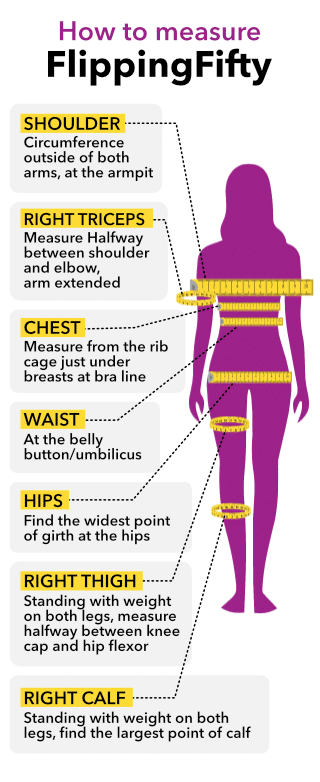
The way to know it’s working for you is to measure. Whether you measure inches and weight alone, not ideal but something, or you get a smart scale and measure the weight composition – amount of fat or muscle. Or you monitor your starting weights and over time realize you need heavier weight, or can do more repetitions, you are improving muscle.
For trainers and coaches, I think there is a choice by many. They prefer to train the motivated, the want-to-work hard clients. Unfortunately, as we’ve seen over the last dozen years the fitness industry trainers jump from 250,000 to 750,000 certified trainers, we’ve not changed the statistic of individuals in the active population by any percentage.
Best Practical Takeaways
A major ACSM update found that resistance training improves strength, muscle, power, and physical function, and that many of the details people over-focus on matter less than previously thought.
The biggest wins from the study
- resistance training improves strength, muscle, power, endurance, and function
- at least 2 sessions per week helps strength
- heavier loads are best for strength
- moderate loads moved fast are best for power
- higher weekly volume helps muscle growth
- full range of motion helps strength
- training to failure is not necessary
- machines and free weights both work
- home-based and band training can work
Bottom line
Doing resistance training consistently matters more than complex programming details. Additional focus may help later. But the most important thing is starting.
Exercise Guidelines Update Finally Simplifies What Works for Women in Midlife
If this episode made you flip your workout routine — share it!
👉 Post to your stories, tag @Flipping50TV in Instagram and share the episode to your best friend.
👉 Meet other women, who are done with outdated fitness advice, at Flipping50 Facebook Group.
👉 Subscribe, share, and leave a review if you’re ready to flip the script on Flipping 50 The Stronger Way.
References:
- Medicine and Science in Sports and Exercise. 2026, PMID: 41843416.
Connect with Flipping 50:
- Flipping50 Insiders Facebook Group
- Instagram – @Flipping50TV
- YouTube – @Flipping50TV
- More Episodes – Flipping 50 The Stronger Way
Other Episodes You Might Like:
- Previous Episode – Natural Appetite Control Without or After the Shot – What is Calocurb?
- Next Episode – Stop the Confusion: Turn Midlife Muscle Strength Into Personal Power
- More Like This – Your Follow-Up Questions on Heavy vs Light Lifting After 50 — Answered With Science
Resources:
- Don’t know where to start? Book your Discovery Call with Debra. Leave this session with insight into exactly what to do right now to make small changes, smart decisions about your exercise time and energy.
- Use Flipping 50 Scorecard & Guide to measure what matters with an easy at-home self-assessment test you can do in minutes.
- Feel full faster with Calocurb! Clinically proven, natural hunger control – prescription free, affordable, and fast acting. Get 10% off when you use this link https://www.flippingfifty.com/calocurb