
Strength training is the fountain of youth. You may love your yoga, Zumba, running or _______, and that’s awesome! Stronger muscles will keep you doing it for longer. Here are just 20 (not all all-inclusive) good reasons to re-examine how you spend your exercise time.
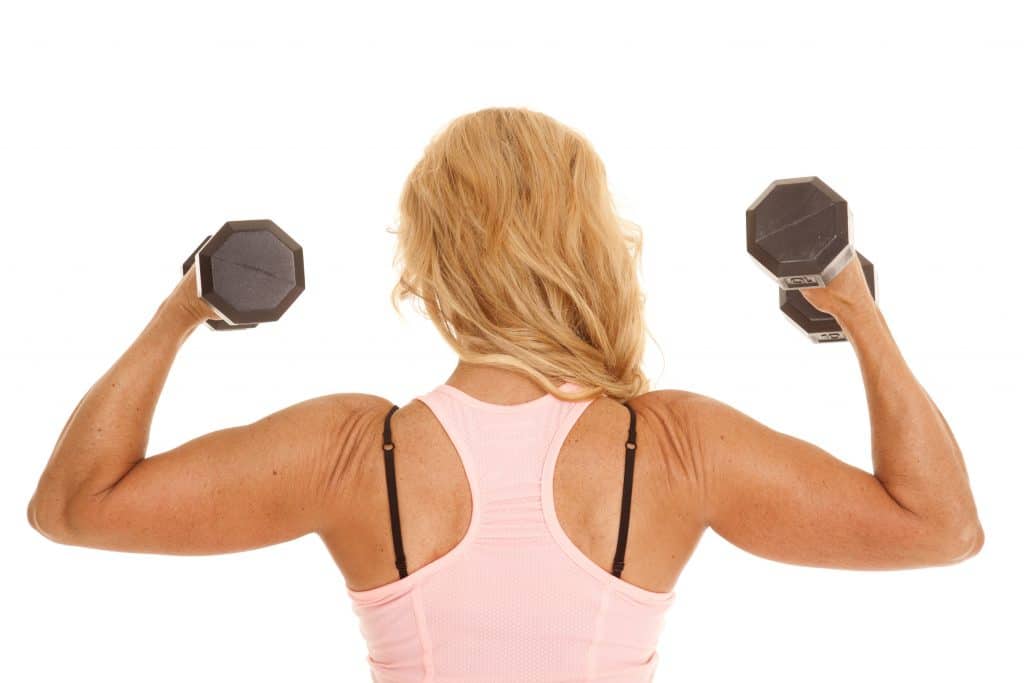
1) Prevent Muscle Losses
Muscle mass peaks at age 25. The loss of muscle for adults who aren’t resistance training is between 8 and 10% every decade. At that rate, living longer will result in sarcopenia (significant muscle and strength losses) in latter decades. Muscle mass can however be developed at any age even in the 9thand 10thdecade of life. Prevention of falls and illness due to frailty is available with resistance training.
I posted a recent research study just yesterday (as I update this post March, 2022), that clearly reminds 30% of muscle mass and 45% of muscle strength are lost between 20 and 80 years old. Antioxidants, 2019. If you’re “done” at 80? maybe you think that’s okay? The problem is as you’re losing all of that? Your life deteriorates.
2) Prevent Bone Losses
Bone mass peaks close to age 30. At that time there’s minimal opportunity to enhance bone density. Loss of bone without resistance training occur at a rate of anywhere from .5 to 3-to-5%/year depending on a woman’s phase of life.
Nearly all older women living beyond 80 will experience osteoporosis making them susceptible to fracture related to falls. Small-framed women or those with a high number of risk factors will have osteoporosis earlier in life.
Resistance training is the only exercise with results preventing natural bone losses or reversing losses even in menopausal or post menopausal women.

3) Increase Strength, Endurance, and Stamina
Your DNA influences the way you age, but not nearly as much as the lifestyle habits you have. Six months of strength training slows down or reverses aging and the expression of 179 genes associated with aging. And? It’s twice weekly that does this. It’s very specific and it happens, not accidentally, to be very specifically the way I program Flipping 50’s strength training programs. You must do the workouts; you also must recover to reap the rewards.
4) Support Natural Hormone Balance
In a recent Flipping 50 Master Class I shared the influence of exercise on optimal hormone balance. Listen to this Flipping 50 podcast to get a summary.
Muscle acts as an endocrine organ. When estrogen drops? You need to make up for the stimulus it has provided for muscle (and bone). Strength training is the how.
5) Boost Growth Hormone
Human Growth Hormone (GH) influences metabolism, body composition and aerobic exercise capacity throughout life. GH production declines naturally with age. Resistance training and intense interval training can boost GH significantly.
I’ve got to be fair and clear here. You need to lift to muscular fatigue and then support yourself with adequate recovery.
6) Boost Testosterone
Testosterone is supportive of libido and of self-confidence. As sex hormone levels decline for women in perimenopause testosterone levels often dip. Intense resistance and interval training are the best ways to naturally boost testosterone levels while endurance exercise reduces testosterone.

7) Increase Metabolism
Loss of muscle mass and a correlating increase in body fat reduces metabolism. Strength training correctly will result in both fat losses and metabolically active lean muscle increases that positively effect metabolism both at rest and after exercise as you age.
“You are probably too old NOT to strength train.”
8) Boost Libido
Forty to sixty percent of women in perimenopause suffer from low libido. An informal survey at flippingfifty.com reveals an even greater percent of women in perimenopause, menopause, and post menopause report low libido. Libido can wane from multiple reasons including lack of body confidence, dropping testosterone levels, and low energy. Exercise, specifically strength training counters each of those factors.
 9) Improve Sleep
It takes 10 minutes of exercise to positively improve self-ratings of sleep by 33%. That’s with no imposition of intensity or measurement of parameters. And long term regular strength training brings about improvements in sleep.
10) Improve Body Composition
Resistance training positively influences body composition by both increasing lean muscle tissue and supporting fat burning. Resistance training burns fat during acute bouts of exercise but has a greater impact on the post-exercise energy and thus fat-burning than aerobic activity does.
 11) Blood Sugar Stabilization Prevents or Reverses Insulin Resistance
Compared with aerobic exercise, positive influence on blood sugar and insulin resistance occur more predictably with strength training. Muscle it’s said, acts like a sponge for blood sugar. You can safely store it there for energy.
12) Decreased Risk of Falls
Falls are associated with loss of muscle, frailty, and weakness. Muscle strength from resistance training prevents those falls from occurring (and reduces damaging fractures if they do occur).
13) Better Reaction skills
Age-related muscle losses are fiber specific. Fast Twitch (FT) muscle fibers are lost twice as fast as you age. FT fibers are responsible for both metabolism and reaction skills. Your ability to right yourself if you trip to avoid falls, or react quickly to changing terrain or body positions is related to the amount of FT fiber you have.
14) Decrease Anxiety
The prevalence of anxiety in older adult women is growing. This post was first written pre-pandemic. Post-pandemic, as I’ve shared with many Flipping 50 podcast guests during March of 2022, the incidence of anxiety is on the rise. Resistance training is directly correlated with reducing the severity of anxiety and used in the treatment of anxiety.
 15) Reduced Depression
The incidence of depression is significantly higher in older women than men. Resistance training has proven to be instrumental in improving mild to moderate depression. Studies show the positive impact of exercise is comparable or better than medications or cognitive therapies, and compared to medications exercise offers no negative side affects.
16) Improved Cognitive Function
Brain function including memory, executive function, problem solving, and brain plasticity all benefit from resistance training. Benefits are experienced after acute (after a single bout of exercise) and long term exercise.
 17) Increased Energy
Energy is generated in the mitochondria, once believed to naturally decline with age and accepted as a fact of life. In the last 8-10 years research has shown that mitochondrial function can be improved and declines reversed so older adults have the same relative mitochondria function as young adults after regular strength training.
18) Enhanced Muscle Protein Synthesis
The ability to use dietary protein for the benefit of muscle tissue repair and growth declines with age. Resistance training has proven to overcome that effect of aging and following acute bouts of resistance training and long term resistance training muscle protein synthesis is improved significantly. That has a positive effect on maintaining lean (metabolically active) muscle tissue and strength.
 19) Decrease Stress
The damaging effects of stress are related to over 80 diseases. By increasing resilience to stress the physiological and psychological responses to stress both are lower. Blood pressure, anxiousness, adrenal responses, and ability to focus or remember improve in fit individuals compared to sedentary.
20) Improve Posture
The effects of a life “out front” causes rounded shoulders, rounded upper back, and forward head hang, all worsened by cell phone use and “tech neck” today. Correct selection and performance of strength training exercises can help correct these postures and the ensuing depressive states that accompany them.
…and one final “bonus” based on the summation of all the above (though this is by no means an all-inclusive buffet of strength training benefits)
21) Truly LIVE longer
“Stronger longer” is a Flipping 50-ism. The goal of longevity is nothing without an increasing long healthspan.Muscular strength is the foundation for all things physical, mental, and emotional related to aging.
If you received a prescription medication from a doctor, it will inevitably have negative side effects, as every medication does.
If you however, perform strength training, whether at a gym alone, with a personal trainer, or at home alone, there are virtually no negative and dozens (partial list above) of positive benefits.
Want support? Starting, learning proper technique, and combining hormone balancing with joint care and your health history requires strength training programming fit for midlife woman. I’ve got you covered. Check out STRONGER. You will find it open, or a no-obligations notifications list so you’ll be first to know when it’s open again.